Blogs, news & views
Stay informed, stay compliant, stay ahead. Explore blogs, articles, news stories, and webinars from industry thought leaders, change-makers, and the Culture Shift team.

Third Party Harassment: The Blind Spot in Most Workplace Harassment Policies
Most harassment policies are built around one scenario: two colleagues, one incident. But a lot of harassment comes from outside the organisation - customers, clients, patients, delegates - and the law is catching up. Learn what third party harassment looks like in practice, where employer liability stands under the Worker Protection Act, and what changes from October 2026 under the Employment Rights Act, including a higher bar for "reasonable steps" and liability from the first incident.

5 Things Every FE Provider Should Do Under the New Ofsted Toolkit
Ofsted's new FE toolkit grades inclusion separately. Colchester Institute's Stefan Jordan shares five steps to evidence impact and prepare for inspection.

Why 68% of Organisations Are Underfunding Misconduct Prevention
Only 32% of organisations have a dedicated misconduct prevention budget. See why this funding gap is becoming harder to defend from October 2026.

Why Don't Employees Report Workplace Misconduct?
Retaliation fear, low trust and unclear follow-through keep employees silent about workplace misconduct. See what closes the reporting gap.
.png)
Culture Shift’s Response to the Acas Code Consultation
Acas wants more workplace concerns resolved informally. Culture Shift agrees, but the draft Code overlooks how concerns are raised and where informal resolution isn't safe.
.png)
The Spreadsheet Problem: Why 22% of Organisations Are Still Managing Misconduct Data Manually
22% of organisations still track misconduct data via spreadsheets. Read why this data gap has become a genuine compliance risk in 2026.
%20(1).png)
Third-Party Harassment: Where the Risk Sits and What Organisations Need to Act On
Watch this webinar to find out the third-party harassment obligations under the Employment Rights Act, where organisational risk sits, and what organisations need to act on to demonstrate compliance.

What the FCA's Q2 2026 whistleblowing data tells regulated firms about culture risk
The FCA published its whistleblowing data for Q2 2026. Containing 886 allegations, 339 of which are related to misconduct and poor reporting systems.

The 29% Blind Spot: What HR Leaders Don't Know About Their Own Workplace
In the Culture Shifters Annual Report 26/27, we asked UK HR professionals a direct question: are you confident that all levels of workplace misconduct are reported and visible within your organisation? Just 71% said yes. That leaves 29%, almost three in ten HR leaders, openly acknowledging that they do not have full visibility of what is happening across their own workforce.
%20(1).png)
Speak Up Culture & Evidencing Compliance for Your Ofsted Inspection
Join Stefan Jordan, Colchester Institute's Director of Inclusion and Wellbeing, with Culture Shift Co-Founder, Gemma McCall, as they break down what Ofsted's new further education and skills inspection toolkit actually expects from you on speaking up, follow-through, and staff protection.
.png)
From reactive to proactive: what the new sexual harassment duty really demands
From October 2026, UK employers face a tougher legal bar. Instead of taking "reasonable steps" to prevent sexual harassment, they'll need to show they've taken "all reasonable steps," a standard that will factor into tribunal compensation decisions and vary depending on an organisation's size, sector, and resources.

The Junior-Senior Speak-Up Divide: What the Data Reveals About Hierarchy and Silence
Speaking up about workplace misconduct shouldn’t depend on where someone sits in the organisational chart. But as shown in The Culture Shifters Annual Report 26/27, it does. Junior employees are twice as likely as senior leaders to believe that speaking up is "pointless," with 54% holding this view compared to just 27% of senior leaders.
Why Collecting Misconduct Data Isn't Enough to Meet the New All Reasonable Steps Duty
Our co-founder and CEO, Gemma McCall, has written a piece for The HR Director exploring one of the most persistent gaps in workplace misconduct management: the space between collecting data and actually using it.
%20(1).png)
The NDA Ban Under the Employment Rights Act: What It Means for HR
When you can no longer buy silence, you have to invest in safety. That's the shift HR teams now need to plan for. Some organisations have historically leaned on settlement agreements and non-disclosure agreements to resolve harassment complaints quietly, keeping the details contained and the reputational risk low. The Employment Rights Act 2025 closes that option down. Once the NDA ban comes into force, a culture of silence stops being something the law will let you enforce.
Third Party Harassment: The Blind Spot in Most Workplace Harassment Policies
Most harassment policies are built around one scenario: two colleagues, one incident. But a lot of harassment comes from outside the organisation - customers, clients, patients, delegates - and the law is catching up. Learn what third party harassment looks like in practice, where employer liability stands under the Worker Protection Act, and what changes from October 2026 under the Employment Rights Act, including a higher bar for "reasonable steps" and liability from the first incident.

Internal vs External Reporting Systems: What's Best for HR Teams?
Most organisations already have some way for staff to raise a concern: a line manager, an HR inbox, a form on the intranet nobody's touched since 2019. The question HR teams are asking now isn't whether they have a reporting system, it's whether the one they've got is good enough.
What Happens Before a Misconduct Panel? Lessons from the University of Sussex
At a recent Community of Practice session, colleagues from the University of Sussex shared how they've strengthened their student misconduct processes. One insight stood out: successful outcomes don't start in the hearing room. They start long before a panel is ever convened.
The Tribunal Risk HR Leaders Can't Ignore
Featured in HR News, our latest research in the Culture Shifters Annual Report 26-27 reveals a stark gap between how confident HR professionals feel about sexual harassment compliance and what they can actually prove. Of 300 senior UK HR professionals surveyed, 91% said they're confident their organisation could evidence taking "all reasonable steps" to prevent sexual harassment if challenged today. But when asked to demonstrate specific measures, the evidence often isn't there. Only half can show clear reporting processes are in place. Only a third have measures to prevent retaliation.
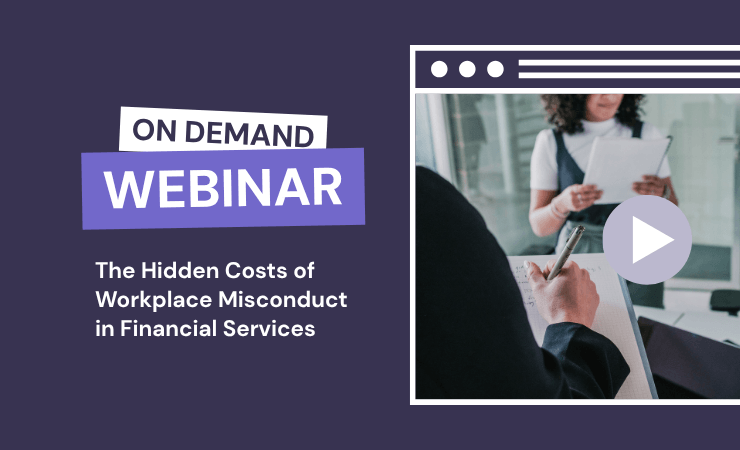
The Hidden Costs of Workplace Misconduct in Financial Services
Join Ash McDowell, Chief Financial Officer at Culture Shift, and Christine Bonney, Head of Culture Transformation, as they explore the true cost of workplace misconduct in financial services and what organisations can do to reduce both risk and cost.
The Confidence vs Compliance Gap That Could Catch Employers Out
Our latest research, surveying 300 HR leaders, has exposed a dangerous mismatch between what employers believe and what they can actually prove.
Misconduct Warning Signs Your Organisation Might Be Missing
Our recent survey found that 28% of UK employees have been bullied or harassed at work in the past year. Almost 60% of those didn't report it.

Why The New NHS Staff Standards Matter
The publication of the new NHS staff standards this month is a moment worth pausing on. For years, the sector has talked about the importance of staff experience, safety and wellbeing. Now, for the first time, that experience will be measured, and organisations will be held accountable for delivering it.

Reporting Barriers in the Creative Industries: Why People Still Don't Speak Up
The creative industries thrive on innovation, collaboration and talent. Yet across film, television, music, publishing, advertising, gaming and the wider creative sector, one challenge continues to undermine healthy workplace cultures: people still don't feel safe speaking up.

A 380% Rise in Protected Belief Cases Tells Us Something Important About Workplace Culture
Gemma McCall, Culture Shift CEO, gives her thoughts on the news that protected belief cases have increased by 380% in five years.

How the National Theatre Lowered the Barrier to Speaking Up
In the world of the performing arts, the National Theatre stands as an institution of creativity and excellence. Yet, behind the curtain of any organisation, the true measure of success lies in the wellbeing and safety of its people. For Sarah Dean, the National Theatre’s People Policy and Engagement Partner, creating a safe environment meant tackling a common but significant hurdle: the daunting nature of formal HR processes.

Feeling inspired?
Take the first step toward preventative misconduct management with a demo of our Report + Support™ platform. We can show you how to breakdown reporting barriers with anonymous 2-way messaging, and how to act before things escalate with name-matching and pattern-spotting across our analytics dashboard.