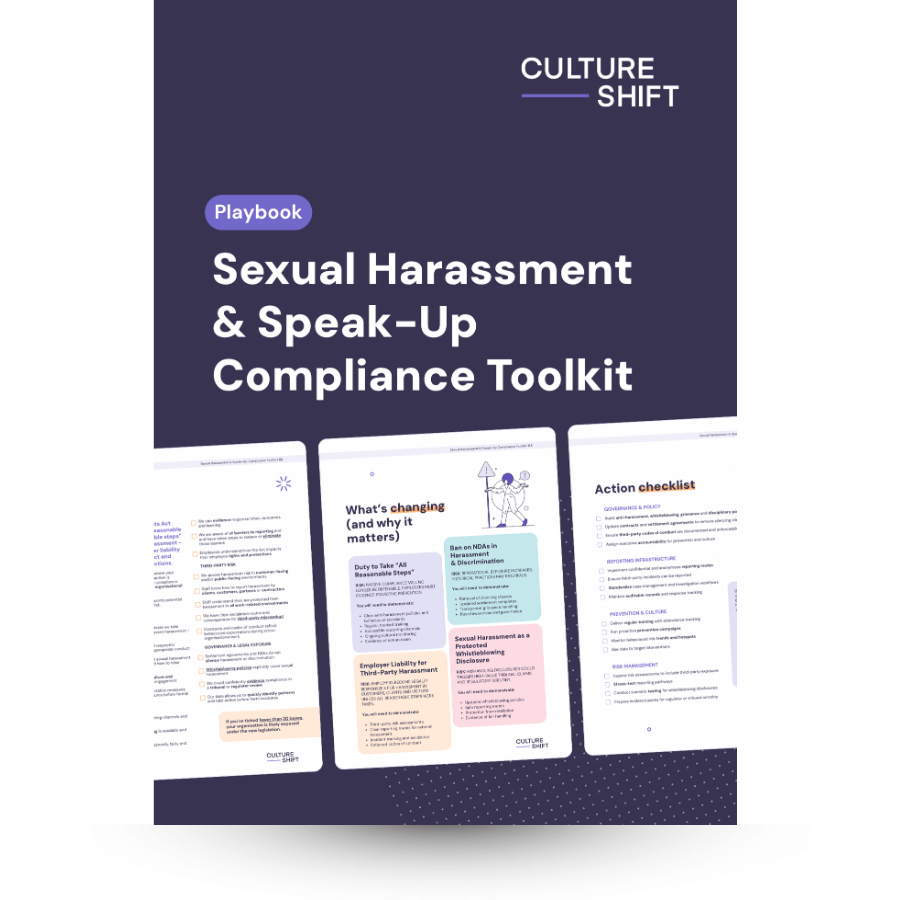
Sexual Harassment & Speak-Up Compliance Toolkit
The Employment Rights Act raises the bar from "reasonable steps" to "all reasonable steps" to prevent sexual harassment, expanding employer liability to third-party conduct and strengthening whistleblowing protections. This represents a significant shift in how organisations must approach prevention, reporting and accountability in the workplace. This toolkit is designed to help you understand where your organisation is exposed, what action is required, and how to evidence compliance in practice. Download the toolkit to:

Understand what "all reasonable steps" means for sexual harassment prevention

Identify gaps in your current reporting, culture and governance approach

Learn how to reduce risk across employee and third-party interactions

Build a clear, defensible approach to compliance ahead of implementation
The reality in numbers
Sexual harassment and workplace misconduct remain widespread across UK organisations, but reporting levels continue to lag behind lived experience. These behaviours sit at the centre of the Employment Rights Act reforms and highlight why stronger employer accountability is being introduced.
60%
incidents go unreported
60% of people who have experienced bullying or harassment at work over the past 12 months did not report it.
37%
too risky
37% said speaking up is not worth the personal risk.
28%
affected directly
Over a quarter of people have experienced bullying or harassment at work over the past 12 months.


More about our Sexual Harassment & Speak-Up Compliance Toolkit
The Employment Rights Act introduces a fundamental shift in employer responsibility for preventing sexual harassment. Organisations will no longer be able to rely on reactive processes or minimum compliance standards. Instead, they will be expected to demonstrate that they have taken all reasonable steps to prevent harm before it occurs, supported by clear evidence, consistent processes and strong leadership accountability.
This includes a strengthened duty to prevent sexual harassment, expanded liability for third-party conduct, restrictions on the use of NDAs in harassment cases, and enhanced whistleblowing protections. Together, these changes significantly increase legal, reputational and cultural risk for organisations that are not prepared.
The Sexual Harassment & Speak-Up Compliance Toolkit translates these requirements into a practical, operational framework. It helps organisations assess their current level of risk, understand where gaps exist, and take targeted action to strengthen prevention, reporting and response.
The toolkit also addresses one of the most persistent challenges organisations face: underreporting. With a significant proportion of employees choosing not to speak up due to fear of consequences or lack of trust, employers must focus on building safe, accessible and credible reporting environments. This includes ensuring anonymity where needed, improving consistency in case handling, and demonstrating that concerns lead to meaningful action.
Ultimately, this toolkit is designed to help organisations move from reactive compliance to proactive prevention. It supports HR, compliance and leadership teams in building the systems, behaviours and evidence required to meet the higher standard set by the Employment Rights Act.
Download your copy
FAQs
Questions? We've got answers.
Under the Employment Rights Act, employers are expected to take proactive and comprehensive action to prevent sexual harassment, rather than simply responding to incidents. This includes policies, training, reporting mechanisms, cultural monitoring and evidence that preventative measures are actively working.
Third-party sexual harassment refers to inappropriate behaviour from individuals outside the organisation, such as customers or partners. Under the new legislation, employers can be held accountable if they fail to take reasonable steps to prevent this type of behaviour.
Low reporting levels create a false sense of security and prevent organisations from identifying and addressing issues early. Under the Employment Rights Act, failing to identify risks due to weak reporting systems may increase legal and reputational exposure.
Organisations should focus on building trust in reporting channels, ensuring anonymity where appropriate, communicating clearly how concerns are handled, and demonstrating consistent action. Employees are more likely to report when they believe it is safe and worthwhile to do so.
No. Policies alone are not sufficient. Employers must be able to demonstrate how prevention is embedded in practice, including evidence of reporting, response, monitoring and continuous improvement. Employees must be aware of your policy and how to access it.
Culture Shift helps organisations meet the requirements of the Employment Rights Act by providing safe, accessible reporting channels through Report + Support™, enabling anonymous disclosures and capturing concerns including third-party incidents. Its case management tools ensure consistent handling, full audit trails and defensible evidence, while real-time data and insights help identify behavioural risks and trends early. Combined with targeted sexual harassment training and prevention campaigns, this supports organisations in building a proactive, evidence-based approach to prevention and compliance.
Still have questions?
The ever-changing regulatory landscape can be tricky to navigate - we're here to guide you through what your organisation needs to do to stay compliant and protect your people.

Your partner in preventing workplace misconduct
Misconduct rarely starts as a headline issue - it starts with something small that goes unaddressed. Culture Shift helps organisations surface concerns early, respond consistently, and embed long-term cultural change through our Report + Support™ platform, trauma-informed training programmes, and community-led best practice.