Reports, Guides & Playbooks
Cut through complexity with practical guides, expert reports, and playbooks designed to help you tackle misconduct and meet compliance obligations.
.png)
The Culture Shifters Annual Report
Nine in 10 HR leaders believe that employees in their organisation feel safe to speak up about workplace misconduct, yet almost 60% of employees choose not to report bullying or harassment last year. Our inaugural Culture Shifters report explores the gap between perception and reality and what the organisations that are actively shifting culture and proactively addressing workplace misconduct are doing differently.
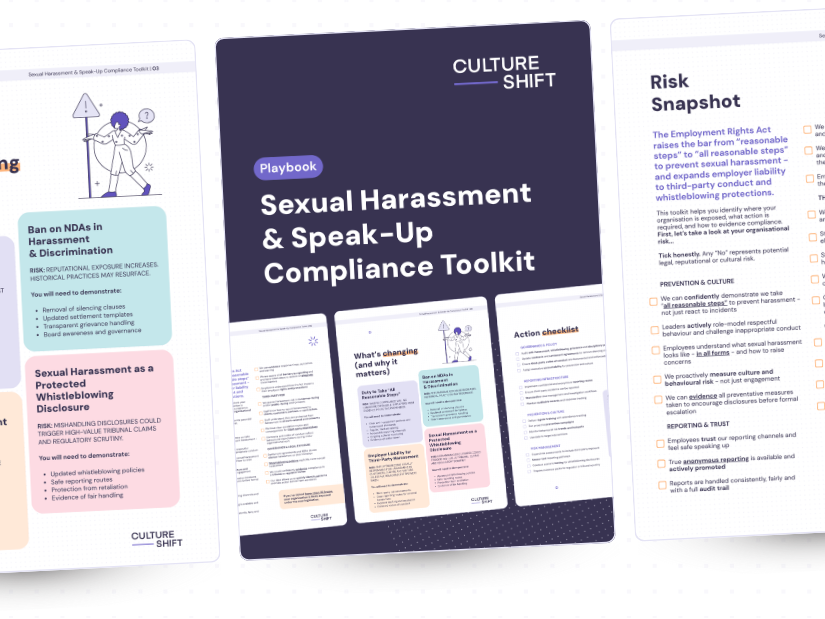
Sexual Harassment & Speak-Up Compliance Toolkit
The Employment Rights Act raises the bar from "reasonable steps" to "all reasonable steps" to prevent sexual harassment, expanding employer liability to third-party conduct and strengthening whistleblowing protections. This toolkit is designed to help you understand where your organisation is exposed, what action is required, and how to evidence compliance in practice.
.png)
Third-Party Harassment Toolkit
A practical guide to third-party harassment: what it is, why it's becoming a bigger legal risk under the Employment Rights Act, and how employers can prevent it before the law changes in October 2026.
.png)
Buyer's Guide to Anonymous Reporting Platforms
Most organisations have a reporting process in place, but that doesn't mean employees trust it enough to speak up. This buyer's guide helps HR leaders understand what to look for in an anonymous reporting platform, the common pitfalls to avoid, and how to choose a solution that supports compliance, trust, and culture change.
The Culture Shifters Annual Report
Nine in 10 HR leaders believe that employees in their organisation feel safe to speak up about workplace misconduct, yet almost 60% of employees choose not to report bullying or harassment last year. Our inaugural Culture Shifters report explores the gap between perception and reality and what the organisations that are actively shifting culture and proactively addressing workplace misconduct are doing differently.
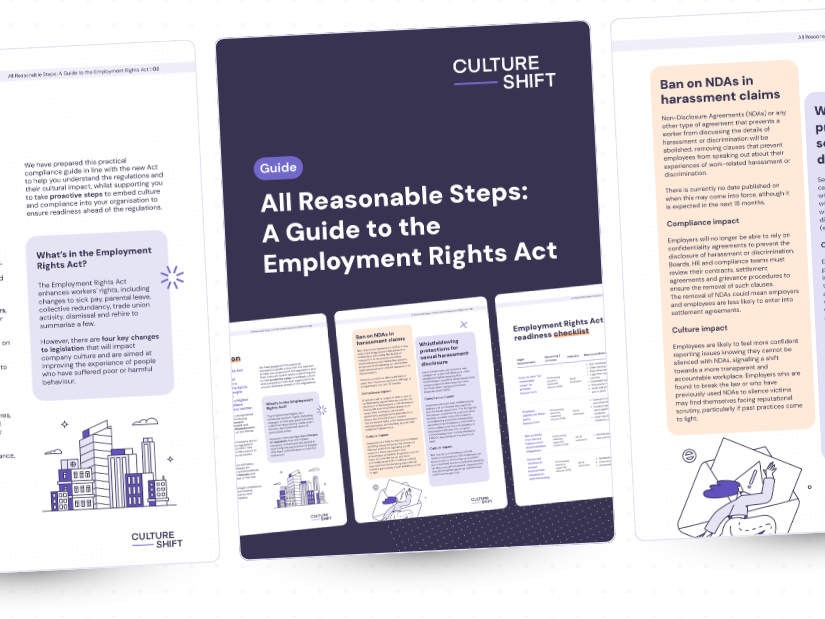
All Reasonable Steps: A Guide to the Employment Rights Act
The Employment Rights Act represents the most significant overhaul of UK workplace rights in over a decade, introducing stronger employer duties around harassment prevention, whistleblowing protection and workplace accountability across every sector. This comprehensive guide explains what the changes mean in practice, and what organisations need to do now to prepare.
Exceeding Regulation: Office for Students (OfS) Condition E6
The Office for Students (OfS) Condition E6 sets clear regulatory requirements for Higher Education providers to prevent and respond to harassment and sexual misconduct. With the regulation now in force, institutions must demonstrate not just compliance, but a clear, proactive approach to creating safer environments for students and staff.
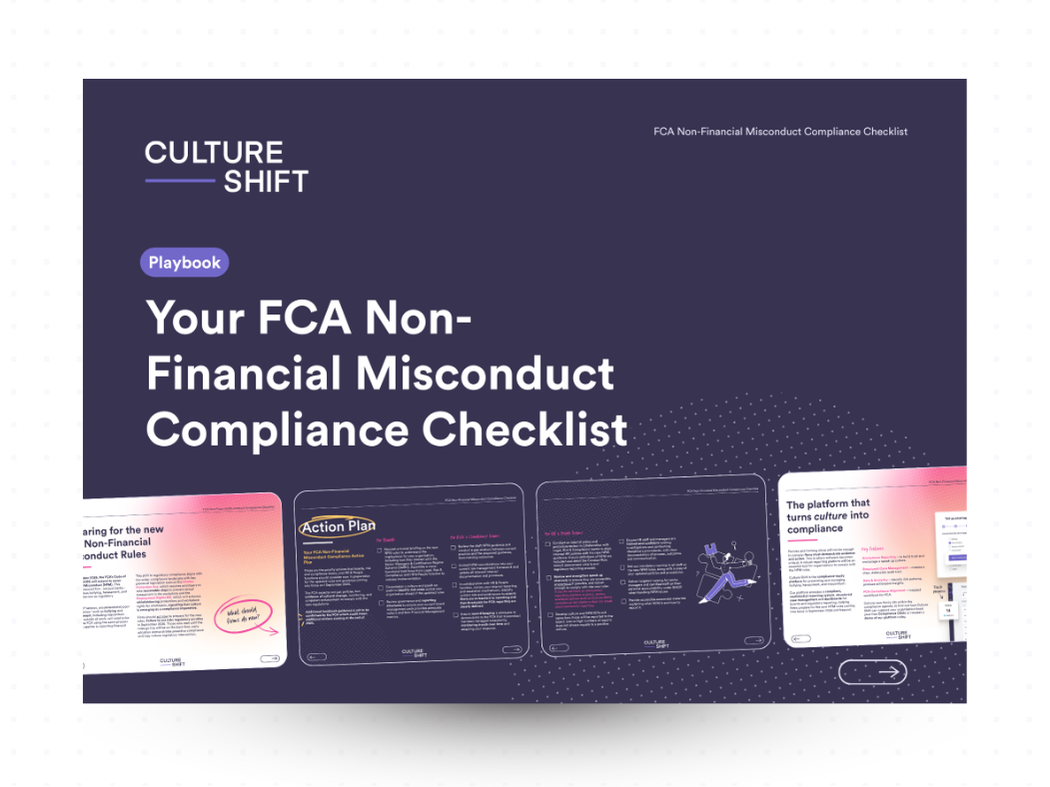
FCA Non-Financial Misconduct Compliance Checklist
From 1 September 2026, the FCA’s Code of Conduct will extend to cover Non-Financial Misconduct (NFM). This means all FCA-regulated firms must treat serious bullying, harassment, sexual misconduct and other poor behaviour as regulatory misconduct. Download our action plan to:
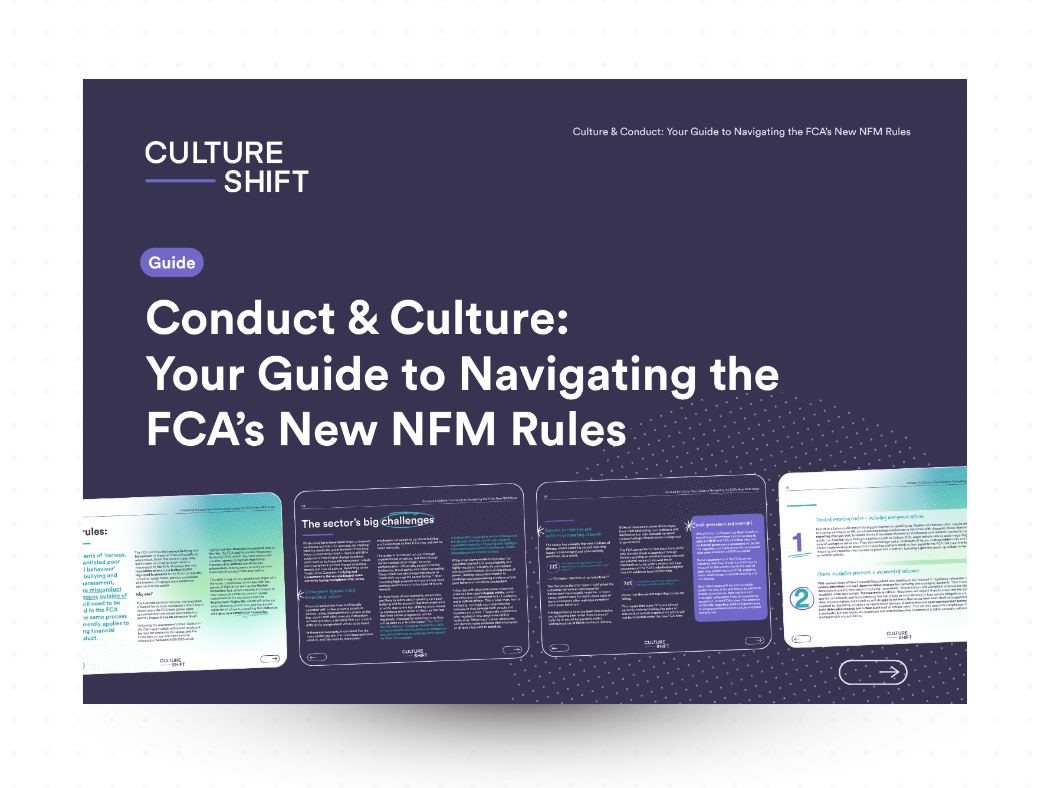
Complete Guide to FCA Non-Financial Misconduct
From 1 September 2026, the FCA’s Code of Conduct will formally extend to include Non-Financial Misconduct (NFM). This represents a fundamental shift in how workplace behaviour is regulated across financial services, bringing issues like bullying, harassment, discrimination and sexual misconduct firmly into the regulatory perimeter.
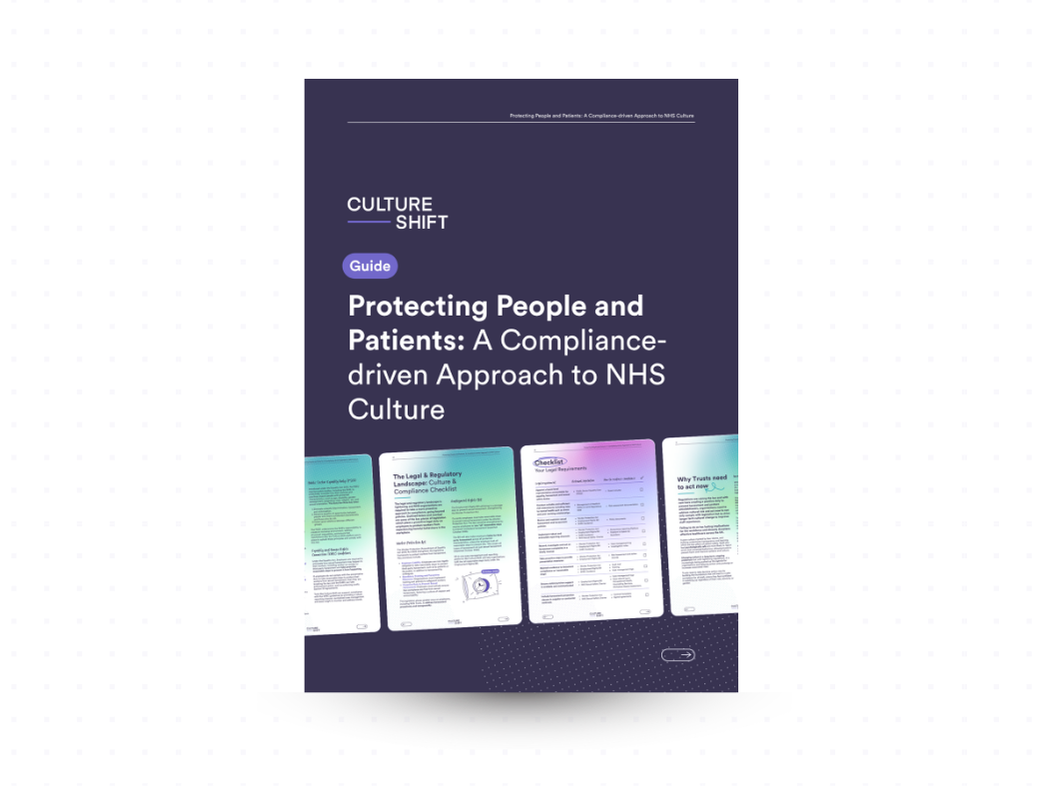
NHS Sexual Safety Charter Guide
The NHS Sexual Safety Charter sets a clear expectation for Trusts to take a zero-tolerance approach to harassment, sexual misconduct and harmful workplace behaviour. Alongside a tightening legal landscape, NHS organisations are now expected to move beyond policy and demonstrate proactive, evidence-based action to protect staff and patients.

Your partner in preventing workplace misconduct
Misconduct rarely starts as a headline issue - it starts with something small that goes unaddressed. Culture Shift helps organisations surface concerns early, respond consistently, and embed long-term cultural change through our Report + Support™ platform, trauma-informed training programmes, and community-led best practice.