Create an inclusive, equitable workplace where every voice is heard
As an ED&I leader, you’re driving meaningful change - ensuring every employee feels safe, respected, and able to thrive. But without clear visibility into lived experiences, it’s difficult to identify barriers, measure progress, and hold the organisation accountable. Report + Support™ is the workplace reporting and insight platform that helps you surface inequities, amplify underrepresented voices, and turn inclusion into measurable action.
Make inclusion real, not just stated
Provide safe, accessible ways for employees to share experiences of discrimination, harassment, or exclusion, so issues are seen, understood, and addressed.
Turn lived experience into insight
Go beyond surveys with real-time data that reveals patterns, disparities, and systemic issues across your organisation.

A stronger foundation for equity, diversity, and inclusion
Creating an inclusive workplace requires more than policies - it requires visibility, trust, and action. Report + Support™ equips ED&I leaders with the tools to capture employee voice, manage sensitive concerns, and drive meaningful, measurable change.
Anonymous and named reporting channels to encourage honest feedback
Safe disclosure of discrimination, harassment, bullying, and microaggressions
Centralised case management for consistent, fair handling of concerns
Two-way anonymous communication to support and engage reporters
Pattern recognition and report linking to uncover systemic inequalities
%20(1).png)
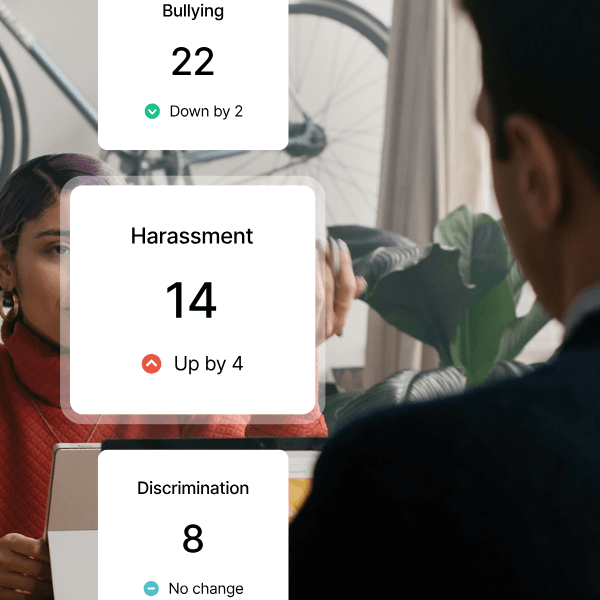
Turn ED&I data into meaningful, measurable progress
Without clear data, inclusion efforts can lack direction and impact. Report + Support™ transforms employee experiences into actionable insight - helping you identify gaps, track progress, and drive accountability across the organisation.
Real-time dashboards highlighting trends across protected characteristics
Insight into hotspots, behaviours, and areas of concern
Data to inform DEI strategy, policy, and interventions
Early identification of systemic barriers and cultural risks
Evidence to support reporting, benchmarking, and leadership accountability
What our customers say
Hear how teams are creating safer, more open workplaces by giving people the confidence to speak up - and the tools to act when it matters most.
"We were seeing trends that we were able to push up into committee structures and say - 'We know where our problems are. We know what our resourcing needs to look like.'"


"Report + Support™ has been an instrumental tool for us in terms of addressing barriers to reporting unwanted behaviours, as well as monitoring trends and collecting data insights to inform our preventative and response strategies."

"It is highly user‑friendly, intuitive to navigate, and continually evolving - actively streamlining and improving processes in response to community‑driven feedback."

"The thing I value most about the Report + Support system is that it's safe, it's secure, but also provides an avenue for you to seek support. Not only to report, but you can also ask for support through the system."

"It's enabled us to be really data driven. We know that the issues are there, but having that reporting tool where we can actually capture how many reports are coming in, the data on the different types of issues that are being experienced, we can obviously then amend and create our services with that in mind."



Key ED&I challenges in driving inclusive workplaces
From uncovering hidden inequalities to embedding sustainable, organisation-wide change, ED&I leaders are expected to turn inclusion from intent into measurable outcomes. This requires visibility of lived experience, trust in reporting mechanisms, and the ability to translate insight into action. Report + Support™ provides the infrastructure, data, and clarity needed to identify inequities, strengthen accountability, and drive meaningful inclusion at scale.
Hidden inequalities
Many experiences of discrimination, exclusion, microaggressions, and unfair treatment are never reported - particularly where employees feel uncertain about outcomes or fear negative consequences. This lack of visibility can allow inequities to persist unnoticed within teams, departments, or processes. Report + Support™ enables safe, accessible reporting that encourages disclosure of sensitive experiences, helping ED&I leaders surface hidden issues and build a clearer, more accurate picture of inclusion across the organisation.
Building trust
Managing workplace complaints and disclosures effectively requires consistency, structure, and clear documentation across every stage of the process. In many organisations, cases are handled inconsistently across managers or teams, increasing the risk of unfair outcomes and incomplete records. Report + Support™ centralises all reports and investigations into a single secure system, enabling HR teams to track cases end-to-end, maintain clear audit trails, assign responsibility, and ensure every concern is handled fairly, consistently, and in line with internal policy.
Taking action
Collecting ED&I data is only valuable if it leads to meaningful change. However, many organisations struggle to translate reporting insight into targeted interventions or sustained improvement. Report + Support™ helps ED&I leaders identify patterns across reports - such as repeated behaviours, hotspots, or systemic issues - and turn them into actionable priorities. This enables more focused interventions, better resource allocation, and measurable progress in inclusion outcomes.
Measuring impact
Demonstrating the impact of ED&I strategy can be challenging without consistent, organisation-wide data. Traditional metrics often fail to capture lived experience or emerging issues in real time. Report + Support™ provides structured reporting and analytics that help ED&I leaders track trends, monitor progress over time, and evidence both improvement and ongoing gaps. This supports clearer reporting to stakeholders and strengthens the credibility of ED&I initiatives.
Driving accountability
Sustainable inclusion requires accountability at every level of the organisation, not just within the ED&I function. However, without visibility of behaviours and outcomes, accountability can be difficult to enforce consistently. Report + Support™ provides transparent, auditable data and reporting structures that enable leaders to see where action is needed, monitor responses, and ensure responsibility for inclusion is shared across teams and leadership levels.
Resources for ED&I teams
Practical guidance, templates, and support materials designed to help you improve reporting culture, strengthen processes, and meet evolving compliance expectations. Explore the full library here.
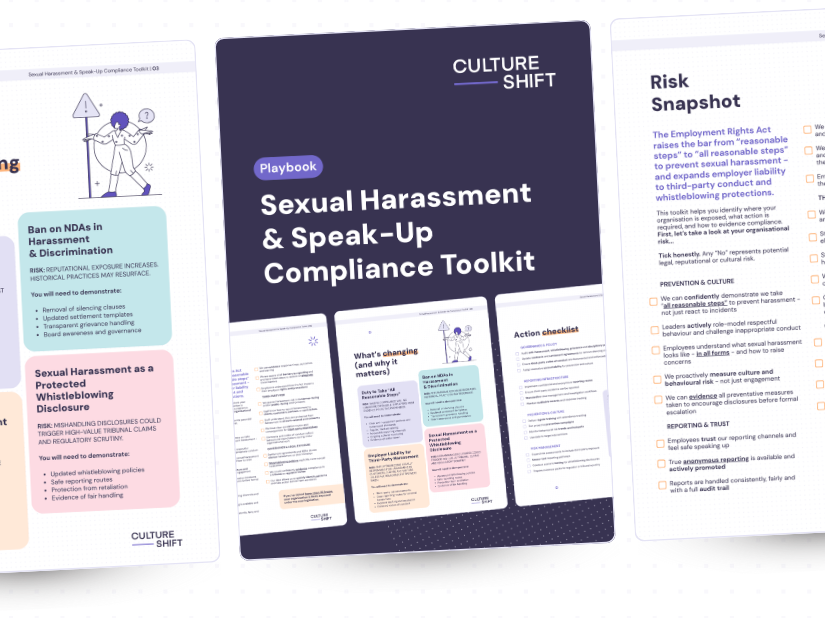
Sexual Harassment & Speak-Up Compliance Toolkit
The Employment Rights Act raises the bar from "reasonable steps" to "all reasonable steps" to prevent sexual harassment, extending liability to third-party conduct and strengthening whistleblowing protections. This toolkit helps you identify organisational exposure, take required action, and evidence compliance in practice.
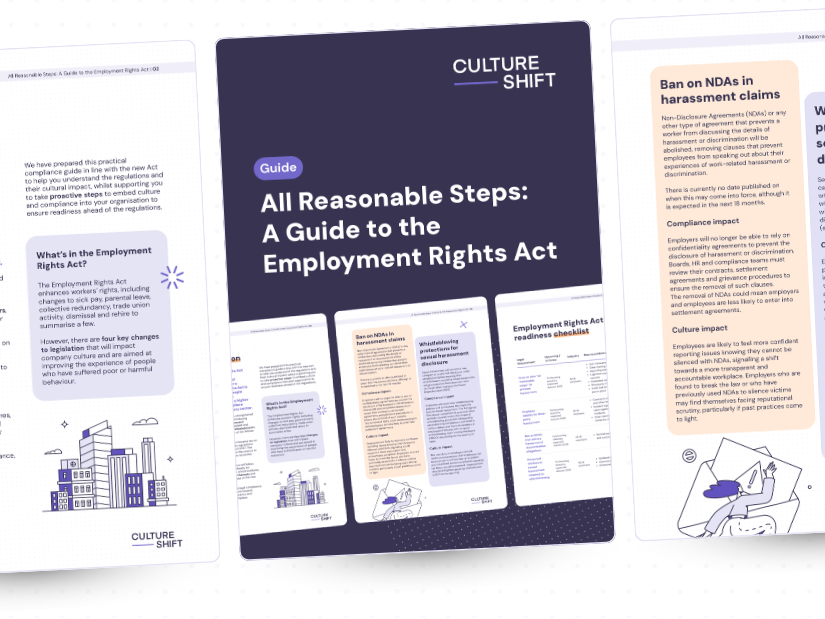
All Reasonable Steps: A Guide to the Employment Rights Act
The Employment Rights Act is one of the most significant UK workplace rights overhauls in over a decade, strengthening employer duties on harassment prevention, whistleblowing protection, and workplace accountability. This guide explains what the changes mean in practice and how organisations should prepare.

Training Academy
Our Training Academy delivers practical, evidence-based courses to your entire organisation. Available online or in person, our courses help leaders, managers, and employees recognise, prevent, and respond to harassment and workplace misconduct. Build a real speak-up culture, reduce risk, and protect everyone in your workplace.


FAQs
Questions? We've got answers.
Discrimination is often underreported, particularly where employees fear retaliation, or lack trust or confidentiality in internal processes. Providing an anonymous reporting route and capturing real-time employee data helps surface experiences of discrimination, harassment, and exclusion that may otherwise remain hidden. This gives ED&I leaders clearer visibility of where action is needed across the organisation.
Effective ED&I measurement requires a combination of quantitative and qualitative data. Reporting systems and employee voice tools provide insight into behaviours, patterns, and disparities, while dashboards help track trends over time. This enables a more complete, evidence-based view of inclusion, equity, and cultural change across the organisation.
Underrepresented employees are more likely to speak up when reporting processes feel safe, confidential, and trustworthy. Anonymous reporting options, clear communication about how concerns are handled, and visible organisational action all help build confidence. This increases engagement with reporting channels and improves the quality of insight available to ED&I teams.
Data provides the evidence needed to identify inequality, prioritise action, and track progress over time. Without reliable data, ED&I strategies risk being reactive or based on incomplete insight. Structured reporting and analytics enable organisations to move from intent to measurable, targeted inclusion outcomes.
Systemic issues are often only visible when individual reports are analysed collectively. By identifying patterns across reports - such as repeated behaviours, specific locations, or recurring themes - ED&I leaders can uncover structural or cultural issues. This enables more strategic, organisation-wide interventions rather than isolated responses.
ED&I leaders can demonstrate progress by using structured reporting, dashboards, and trend analysis to show changes over time. This provides clear evidence of improvements, ongoing challenges, and areas of focus, supporting transparent communication with senior leadership, employees, and external stakeholders.
Training supports inclusion by increasing awareness of expected behaviours, improving understanding of discrimination and bias, and equipping managers and leaders to respond appropriately. It reinforces organisational values and helps embed consistent inclusive behaviours across teams and functions.
Shifting from performative to impactful and meaningful ED&I requires grounding strategy in real employee experiences and data. Capturing lived experience through reporting systems, analysing patterns, and taking visible, consistent action ensures inclusion efforts are evidence-based, measurable, and embedded across the organisation.
Still have questions?
Driving meaningful inclusion requires insight, action, and accountability. We're here to help you uncover what’s really happening, reduce risk, and create a workplace where everyone can thrive.