Workplace misconduct reporting and case management for HR teams
As an HR leader, you're under increasing pressure to prevent bullying, harassment, and workplace misconduct while staying compliant with employment law and regulatory expectations. Report + Support™ is the secure workplace reporting and case management platform that helps you capture concerns early, manage investigations consistently, identify organisational risk, and build a culture where employees feel safe to speak up.
Stop issues escalating
Give employees a safe, accessible way to report concerns early without fear of repercussions - before they become formal grievances, whistleblowing cases, or employment tribunals.
Actionable insight
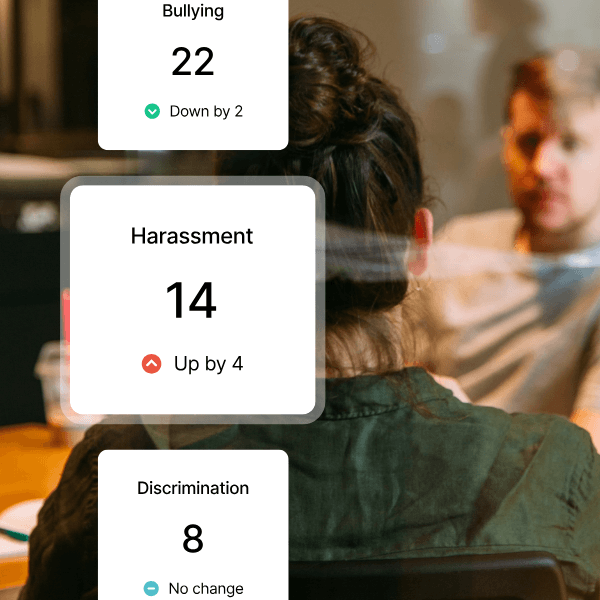
Access live data dashboards and trend analysis to identify patterns, address repeat behaviours, and take proactive action to prevent harm before it occurs.
A smarter, compliant way to manage workplace concerns
Managing workplace complaints, harassment reports, and employee misconduct is complex, time-consuming, and high risk. Report + Support™ provides HR teams with a centralised, compliant system to manage every report with consistency, transparency, and confidence.
Anonymous and named reporting channels to encourage employee voice
Centralised case management system for workplace complaints and investigations
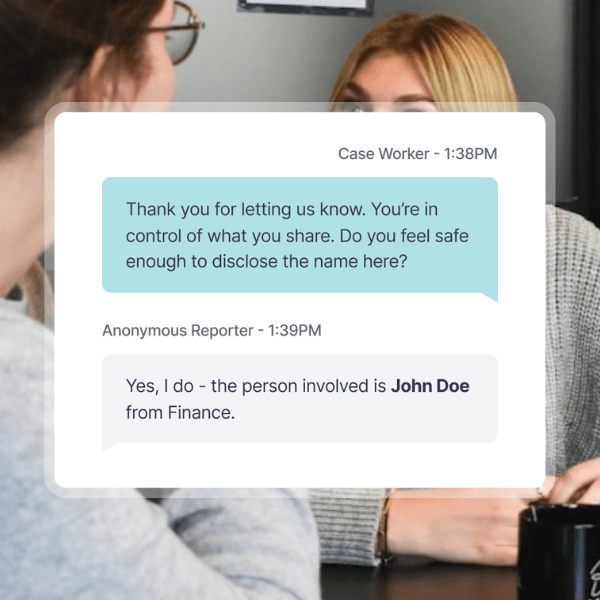
Two-way anonymous messaging to gather evidence and communicate securely
Automated audit trails and documentation for compliance and reporting
Name-matching and report linking to identify repeat behaviours and patterns
Turn employee reporting into actionable HR insight
When workplace incidents are handled in isolation, critical patterns are missed. Report + Support™ transforms employee reports into meaningful data, giving HR leaders the visibility needed to act early, reduce risk, and drive culture change.
Organisation-wide reporting to identify trends, hotspots, and risks
Real-time HR dashboards for data-driven decision making
Early warning indicators to prevent escalation
Evidence to support wellbeing, DEI, and culture initiatives
Insights to demonstrate HR impact and organisational value
What our customers say
Hear how teams are creating safer, more open workplaces by giving people the confidence to speak up - and the tools to act when it matters most.
"We were seeing trends that we were able to push up into committee structures and say - 'We know where our problems are. We know what our resourcing needs to look like.'"

"Report + Support™ has been an instrumental tool for us in terms of addressing barriers to reporting unwanted behaviours, as well as monitoring trends and collecting data insights to inform our preventative and response strategies."
"It is highly user‑friendly, intuitive to navigate, and continually evolving - actively streamlining and improving processes in response to community‑driven feedback."

"The thing I value most about the Report + Support system is that it's safe, it's secure, but also provides an avenue for you to seek support. Not only to report, but you can also ask for support through the system."

"It's enabled us to be really data driven. We know that the issues are there, but having that reporting tool where we can actually capture how many reports are coming in, the data on the different types of issues that are being experienced, we can obviously then amend and create our services with that in mind."



Key HR challenges in managing workplace misconduct
From workplace complaints and investigations through to compliance, culture, and employee relations, HR teams are under increasing pressure to manage risk, protect employees, and maintain consistency across the organisation. Report + Support™ gives you the visibility, structure, and insight needed to manage these challenges proactively and defensibly, while removing the reporting barriers for employees.
Risk management
Workplace issues such as bullying, harassment, discrimination, and inappropriate behaviour are often difficult to detect early - particularly when employees are reluctant to flag concerns. Without clear visibility and trust from employees, risks can remain hidden until they escalate into formal grievances, legal claims, or reputational issues. Report + Support™ helps HR teams surface concerns earlier, identify patterns across reports, and take proactive steps to reduce organisational, legal, and cultural risk before issues become critical.
Case management
Managing workplace complaints and disclosures effectively requires consistency, structure, and clear documentation across every stage of the process. In many organisations, cases are handled inconsistently across managers or teams, increasing the risk of unfair outcomes and incomplete records. Report + Support™ centralises all reports and investigations into a single secure system, enabling HR teams to track cases end-to-end, maintain clear audit trails, assign responsibility, and ensure every concern is handled fairly, consistently, and in line with internal policy.
Regulatory compliance
HR teams must navigate a complex and evolving regulatory landscape, including employment law and whistleblowing obligations. Demonstrating compliance is not only about having policies in place, but about evidencing how concerns are received, managed, investigated, and resolved. Report + Support™ supports compliance by creating structured workflows, maintaining time-stamped audit trails, and ensuring consistent handling of all reports - helping HR teams demonstrate due diligence and respond confidently to internal and external scrutiny.
Speak-up culture
A strong speak-up culture is essential for identifying issues early, but it depends on trust, psychological safety, and confidence in the reporting process. In many organisations, employees hesitate to raise concerns due to fear of retaliation or uncertainty about outcomes. Report + Support™ provides accessible, confidential reporting channels - including anonymous options - alongside clear communication pathways that help employees feel heard, supported, and confident that action will be taken, strengthening trust and transparency across the organisation.
Demonstrating HR value
HR is increasingly expected to demonstrate strategic impact. However, without consolidated data, it can be difficult to evidence the true scale of issues, the effectiveness of interventions, or the value of preventative action. Report + Support™ provides HR leaders with real-time reporting, trend analysis, and organisational insight that can be used to demonstrate risk reduction, cultural improvement, and the wider contribution of HR to business performance at leadership and board level.
Resources for HR Teams
Practical guidance, templates, and support materials designed to help you improve reporting culture, strengthen processes, and meet evolving compliance expectations. Explore the full library here.
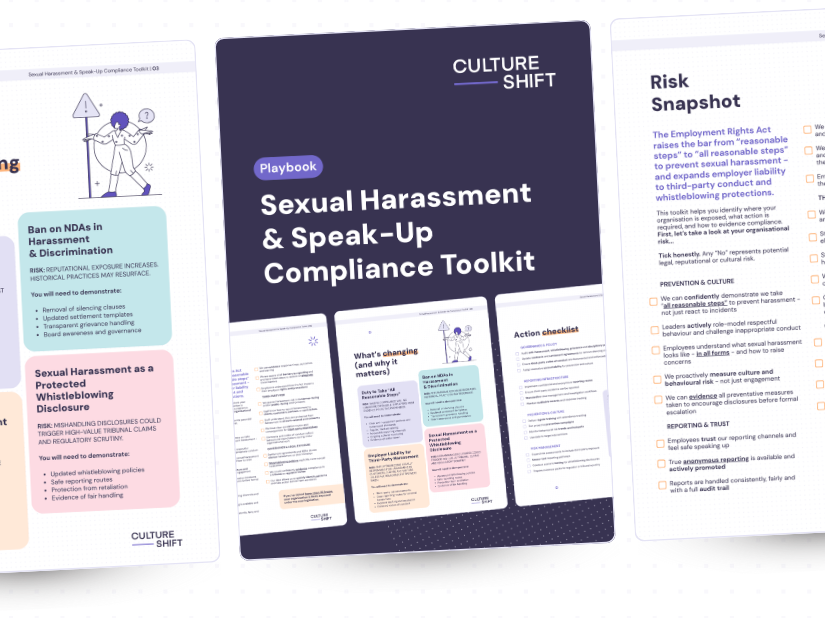
Sexual Harassment & Speak-Up Compliance Toolkit
The Employment Rights Act raises the bar from "reasonable steps" to "all reasonable steps" to prevent sexual harassment, extending liability to third-party conduct and strengthening whistleblowing protections. This toolkit helps you identify organisational exposure, take required action, and evidence compliance in practice.
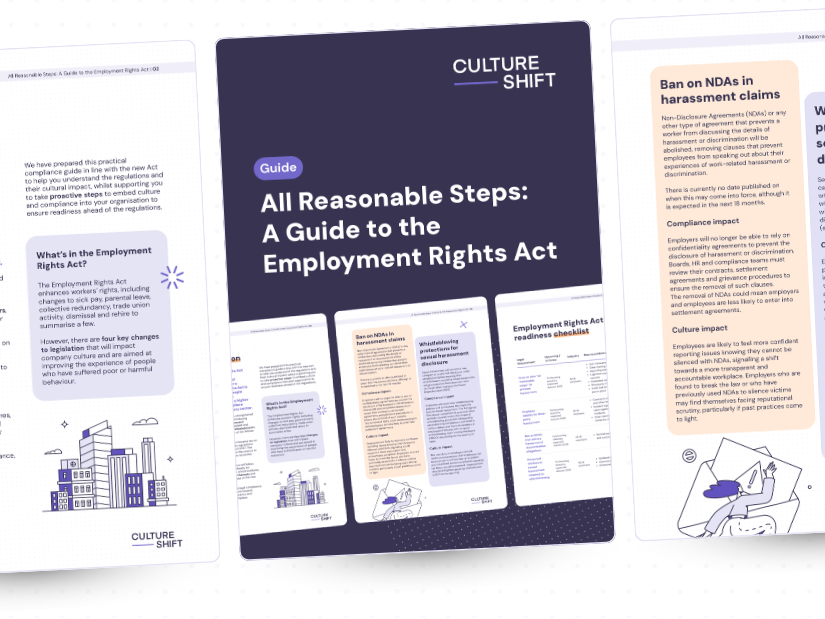
All Reasonable Steps: A Guide to the Employment Rights Act
The Employment Rights Act is one of the most significant UK workplace rights overhauls in over a decade, strengthening employer duties on harassment prevention, whistleblowing protection, and workplace accountability. This guide explains what the changes mean in practice and how organisations should prepare.

Training Academy
Our Training Academy delivers practical, evidence-based courses to your entire organisation. Available online or in person, our courses help leaders, managers, and employees recognise, prevent, and respond to harassment and workplace misconduct. Build a real speak-up culture, reduce risk, and protect everyone in your workplace.


FAQs
Questions? We've got answers.
Workplace complaints are often raised through multiple channels - emails, line managers, informal conversations, and anonymous reports - making them difficult to track, spot patterns and manage consistently. Without a structured process, cases can be missed or handled differently depending on who receives them. A centralised HR case management system brings all workplace concerns into one secure platform, allowing HR teams to log, track, and manage every issue consistently. This improves visibility, reduces administrative burden, and ensures a fair, standardised approach to employee relations.
Effective workplace investigations rely on structure, consistency, and clear documentation. HR teams need a reliable way to record allegations, gather evidence, assign investigators, and track progress from initial report through to resolution. Using dedicated workplace investigation software or HR case management tools ensures every step is recorded in a single system. This creates a clear audit trail, improves decision-making, and helps ensure investigations into issues such as bullying, harassment, or misconduct are handled fairly and efficiently.
A strong speak-up culture is built on trust, accessibility, and confidence in the reporting process. Employees are more likely to raise concerns when reporting is accessible, confidential, and clearly acted upon. Providing anonymous reporting channels removes barriers to disclosure and encourages earlier reporting of issues. Combined with clear communication, visible outcomes, and consistent follow-up, HR teams can use speak-up culture tools to increase engagement and surface issues before they escalate.
Anonymous reporting increases the likelihood that employees will raise sensitive concerns, particularly around bullying, harassment, discrimination, or misconduct. Many employees hesitate to speak up when identity is required, especially in smaller teams or hierarchical environments. Anonymous reporting tools give employees a safe route to disclose issues, helping HR teams identify risks earlier, understand patterns of behaviour, and respond before problems escalate. It also improves overall reporting rates and strengthens trust in internal processes.
Workplace misconduct often goes unnoticed when reports are handled in isolation. By centralising all reports in a single case management platform, teams can identify repeat behaviours, linked cases, and emerging misconduct trends across departments or locations. Case management systems with reporting dashboards make it easier to spot patterns over time, enabling HR to move from reactive handling of individual cases to proactive risk identification and intervention, as well as preventative measures going forward.
Compliance under the Employment Rights Act requires organisations to be able to demonstrate how workplace concerns are managed in practice, not just documented in policy. HR teams need to show that issues are handled consistently, appropriately, and in a timely way, with clear processes from initial report through to resolution. A key requirement is demonstrating that "all reasonable steps" have been taken to prevent and address workplace issues such as misconduct, bullying, and harassment. Centralised HR case management systems support this by creating a clear audit trail of reports, actions, and outcomes, providing the evidence needed to demonstrate due diligence and defend decision-making.
Training helps employees and managers understand expected behaviours, recognise inappropriate conduct, and respond appropriately when issues arise. It reinforces organisational standards and ensures staff know how and where to report concerns or misconduct. When combined with reporting and case management systems, training supports a preventative approach - reducing incidents, improving awareness, and strengthening overall workplace culture.
HR teams often become aware of issues only after they escalate into formal complaints or grievances - when the harm has already been done. By implementing early reporting tools and centralised case management, organisations can detect patterns sooner and respond before issues grow. Real-time dashboards, trend analysis, and structured reporting allow HR teams to identify risk signals early, take preventative action, and shift from reactive problem-solving to proactive workforce risk management.
Still have questions?
Navigating workplace misconduct, compliance, and employee relations can be complex. Our team is here to help you understand your obligations, reduce risk, and build a safer, more transparent workplace.