Strengthen staff safety to protect patient care
In healthcare, staff experience and patient care and safety are directly linked. When concerns such as bullying, harassment, or inappropriate behaviour go unreported or unaddressed, it impacts not only staff wellbeing, but also team performance, communication, and quality of care. Report + Support™ provides a workforce reporting system that enables healthcare organisations to capture concerns early, manage them consistently, identify behavioural risks, and strengthen a culture where staff feel safe to speak up.
Encourage early reporting
Give staff a safe, accessible way to raise concerns, helping your organisation address issues before they impact team dynamics, patient safety, or staff retention.
Improve visibility and oversight
Real-time data and reporting provide insight into behavioural risks across departments, supporting safer working environments and improved patient care outcomes.

Safe and structured handling of staff concerns
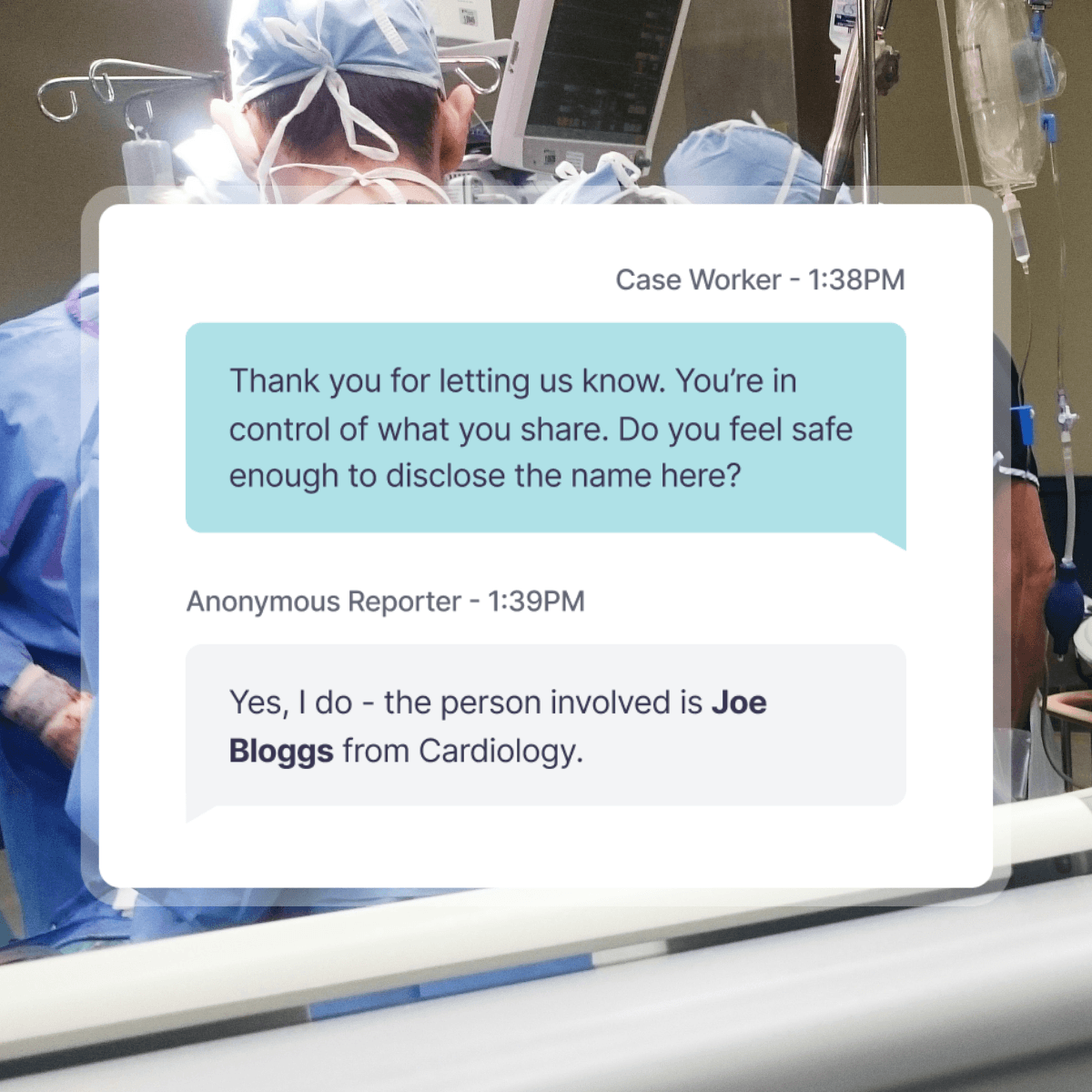
Report + Support™ helps Freedom to Speak Up Guardians and NHS People teams capture concerns consistently and demonstrate action in line with Freedom to Speak Up principles. Handling workplace concerns in healthcare requires clear processes, psychological safety, and consistent decision-making. Report + Support™ provides a centralised reporting and case management system that ensures every concern is captured, assessed, and managed appropriately - supporting both staff and patient safety and organisational accountability.
Anonymous and named reporting options to support safe disclosure
Centralised system to track concerns and maintain clear records
Two-way anonymous messaging to support sensitive case handling
Report linking and pattern recognition to identify repeat behaviours and risks
Alignment with Freedom to Speak Up principles through safe and accessible reporting channels
Turn staff insight into safer care environments
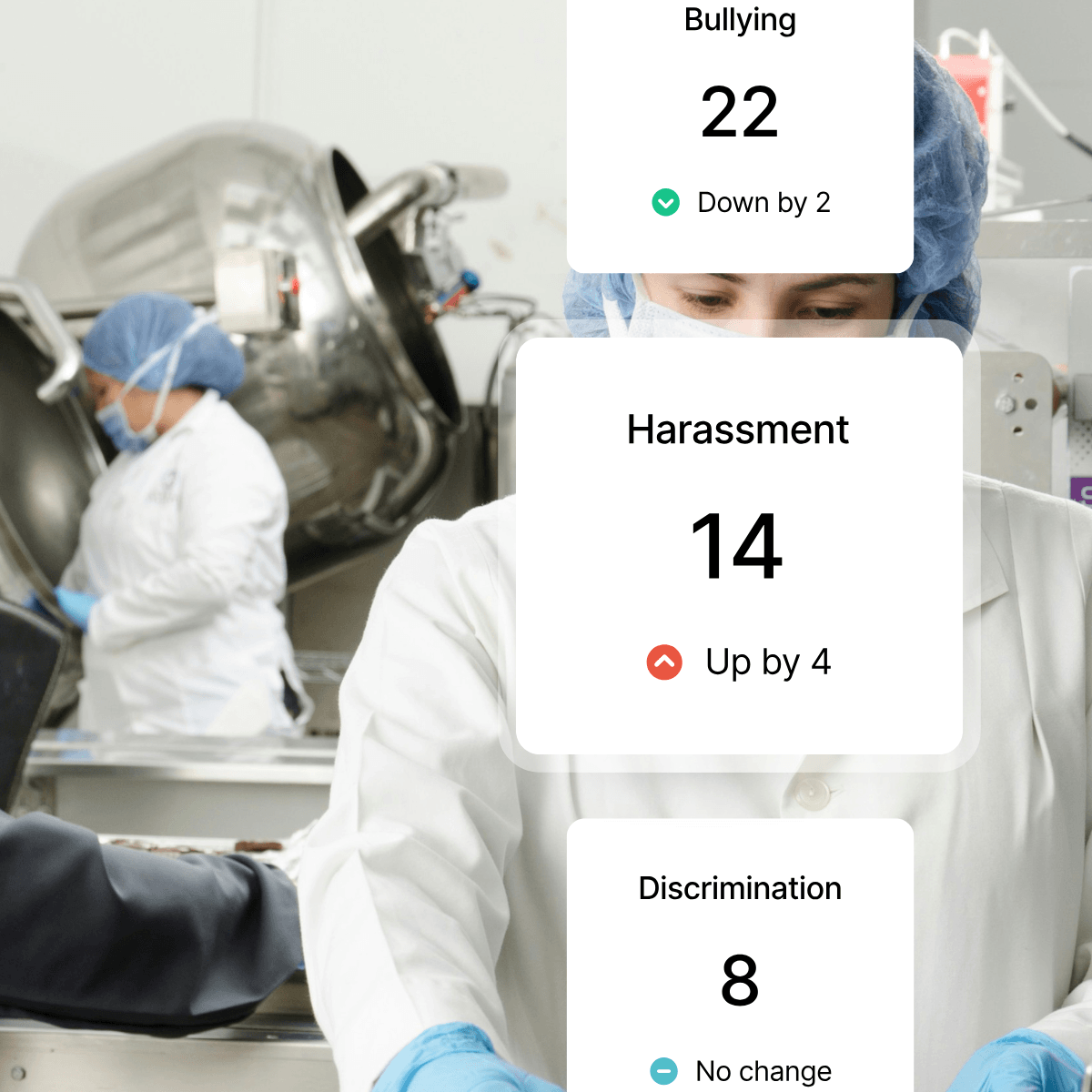
Healthcare organisations must be able to demonstrate how they are identifying and addressing risks to staff and patient safety. Report + Support™ provides the data and insight needed to move from reactive issue handling to proactive workforce risk management.
Aggregated reporting to identify trends across departments and roles
Real-time dashboards to support leadership oversight and decision-making
Early-warning indicators to highlight emerging risks to staff and patient safety
Audit trails to evidence actions taken and support "all reasonable steps"
Data that helps leadership teams spot patterns early and show the board what action has been taken
What our customers say
Hear how teams are creating safer, more open workplaces by giving people the confidence to speak up - and the tools to act when it matters most.
"We were seeing trends that we were able to push up into committee structures and say - 'We know where our problems are. We know what our resourcing needs to look like.'"


"Report + Support™ has been an instrumental tool for us in terms of addressing barriers to reporting unwanted behaviours, as well as monitoring trends and collecting data insights to inform our preventative and response strategies."

"It is highly user‑friendly, intuitive to navigate, and continually evolving - actively streamlining and improving processes in response to community‑driven feedback."

"The thing I value most about the Report + Support system is that it's safe, it's secure, but also provides an avenue for you to seek support. Not only to report, but you can also ask for support through the system."

"It's enabled us to be really data driven. We know that the issues are there, but having that reporting tool where we can actually capture how many reports are coming in, the data on the different types of issues that are being experienced, we can obviously then amend and create our services with that in mind."



Key challenges in managing staff safety and behaviour in healthcare
Healthcare organisations must manage workplace behaviour in a way that protects both staff wellbeing and patient care. When concerns are not raised or addressed early, the impact can extend beyond individuals to team performance, communication, and clinical outcomes. Report + Support™ provides the structure, visibility, and confidence to address these challenges effectively.
Staff safety
In healthcare, staff experience is directly linked to patient outcomes. Workplace misconduct can affect communication, morale, and decision-making within clinical and administrative teams, ultimately impacting quality of care. However, these risks are often difficult to identify early without structured reporting and visibility. Report + Support™ connects staff-reported concerns with organisational insight, enabling leaders to identify issues sooner and take action to protect both staff wellbeing and patient safety.
Underreporting
Concerns such as bullying, harassment, discrimination, and inappropriate behaviour are frequently underreported in healthcare environments, particularly where staff fear repercussions or believe nothing will change. This creates hidden risk within teams and services. Report + Support™ addresses this by providing safe, accessible, and anonymous reporting channels, supporting the NHS Sexual Safety Charter and enabling earlier disclosure of concerns. This is a common challenge in NHS workforce reporting and Freedom to Speak Up systems, which often aren’t utilised until an employee is raising a formal grievance.
Evidencing prevention
Increasing regulatory expectations and ever-evolving employment law mean organisations must be able to demonstrate robust processes for handling complaints, disclosures, and misconduct. Failure to do so can result in investigations, financial penalties, or legal claims. Report + Support™ supports risk reduction by ensuring structured workflows, complete documentation, and transparent audit trails that provide defensible evidence of compliance and due diligence.
Complex cases
Workplace issues in healthcare can be sensitive, multi-layered, and involve multiple teams or professional groups. Without a consistent approach, it can be difficult to maintain visibility, fairness, and accountability across cases. Report + Support™ ensures concerns are captured and managed in a structured way, supporting consistent decision-making and clear oversight.
Workforce pressure
High workload environments and operational pressure can make it harder for healthcare staff to raise concerns and for issues to be addressed quickly. Over time, this can erode trust, increase turnover, and impact organisational culture. Report + Support™ enables early reporting and real-time visibility of issues, helping healthcare institutions respond more effectively and maintain a safer, more supportive and more sustainable working environment.
Healthcare sector resources
Practical guidance, templates, and support materials designed to help you improve reporting culture, strengthen processes, and meet evolving compliance expectations. Explore the full library here.
NHS Sexual Safety Charter Guide
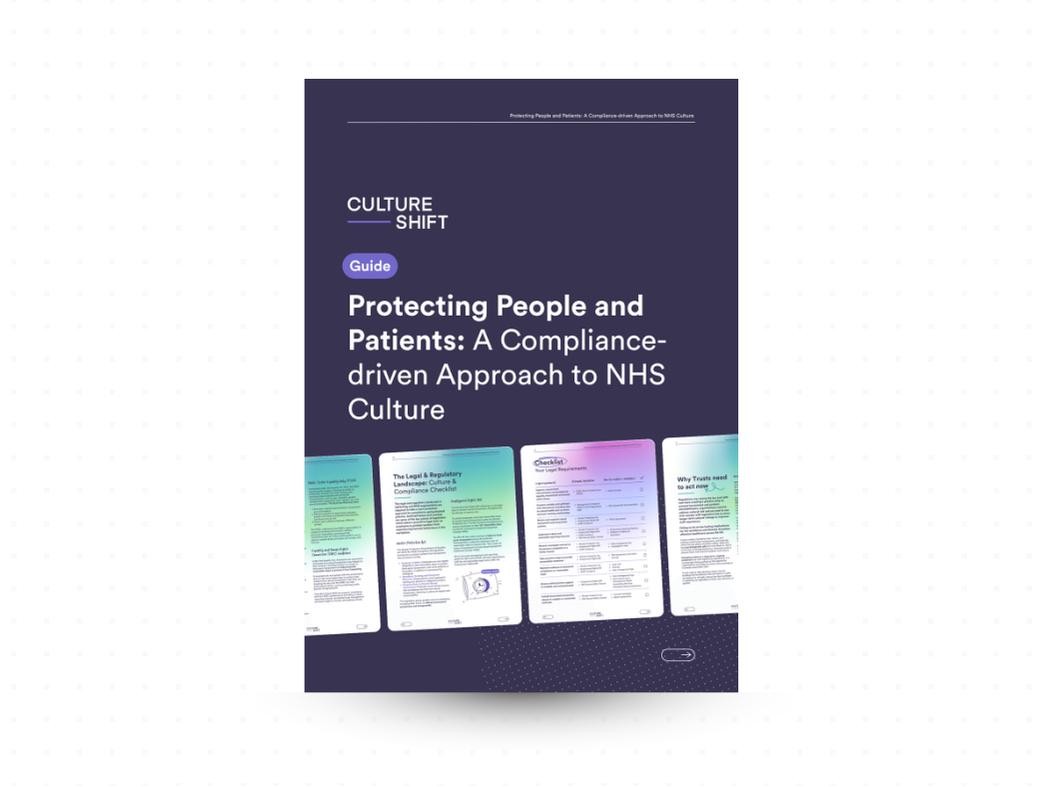
The NHS Sexual Safety Charter sets a clear expectation for Trusts to take a zero-tolerance approach to harassment, sexual misconduct and harmful workplace behaviour. This guide explores what the Charter means in practice, how it aligns with broader legal duties, and what Trusts need to do to build safer, more accountable cultures.
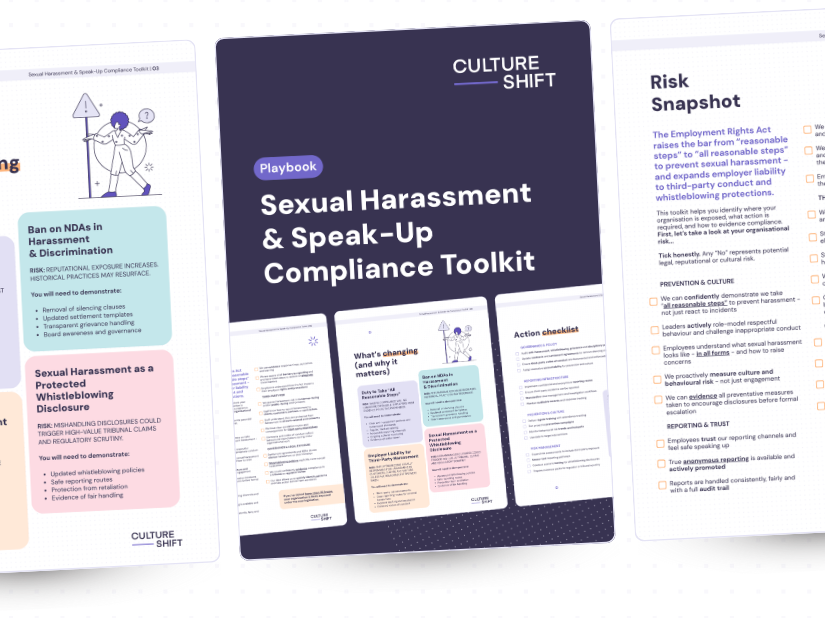
Sexual Harassment & Speak-Up Compliance Toolkit
The Employment Rights Act raises the bar from "reasonable steps" to "all reasonable steps" to prevent sexual harassment, extending liability to third-party conduct and strengthening whistleblowing protections. This toolkit helps you identify organisational exposure, take required action, and evidence compliance in practice.

Training Academy
Our Training Academy delivers practical, evidence-based training tailored to healthcare environments, helping staff and leaders recognise, prevent, and respond to inappropriate behaviour and workplace misconduct that can impact staff wellbeing and patient safety. Support the NHS Sexual Safety Charter, strengthen your speak-up culture, and ensure your organisation is equipped to protect both staff and patients.


FAQs
Questions? We've got answers.
NHS organisations handle concerns about bullying or inappropriate behaviour through structured workplace reporting and investigation processes that ensure issues are formally recorded and reviewed. These systems allow staff to raise concerns safely and ensure that reports are assessed consistently, regardless of department or seniority. This improves visibility of behavioural issues across the workforce and supports safer, more respectful working environments.
Hospitals manage staff safety risks by integrating workplace reporting systems into wider operational and safeguarding processes, allowing concerns to be captured alongside clinical pressures. This helps identify issues such as workload stress, unsafe behaviour, or team conflict that may indirectly affect both staff wellbeing and patient care. By centralising reporting, healthcare organisations can balance workforce safety with service delivery demands more effectively.
Healthcare organisations reduce underreporting by creating reporting systems that are accessible, confidential, and trusted by staff across all roles and shifts. Clear communication about how concerns are handled, combined with visible action on reported issues, helps build confidence in the system. This leads to earlier disclosure of issues that might otherwise remain hidden, improving overall workforce safety.
NHS trusts manage cross-department concerns by using centralised reporting systems that bring all reports into a single oversight framework. This allows issues involving multiple teams, wards, or services to be tracked consistently and escalated appropriately. It improves coordination between departments and ensures that complex or system-wide issues are not managed in isolation.
Healthcare leaders identify early warning signs by reviewing reporting trends across teams, departments, and services to detect patterns in workplace concerns. This includes monitoring repeated behavioural issues, increases in reporting volume, or clusters of related incidents. Early identification supports earlier intervention and helps prevent escalation into more serious workforce or safety issues.
Healthcare organisations ensure accountability by applying structured reporting and investigation processes that treat all concerns consistently, regardless of seniority. Reports involving senior staff are handled through defined escalation routes to ensure independence and governance oversight. This reinforces trust in the reporting system and ensures that concerns are addressed fairly and transparently.
Still have questions?
The ever-changing regulatory landscape can be tricky to navigate - we're here to guide you through what your organisation needs to do to stay compliant and protect your people.