
NHS Sexual Safety Charter Guide
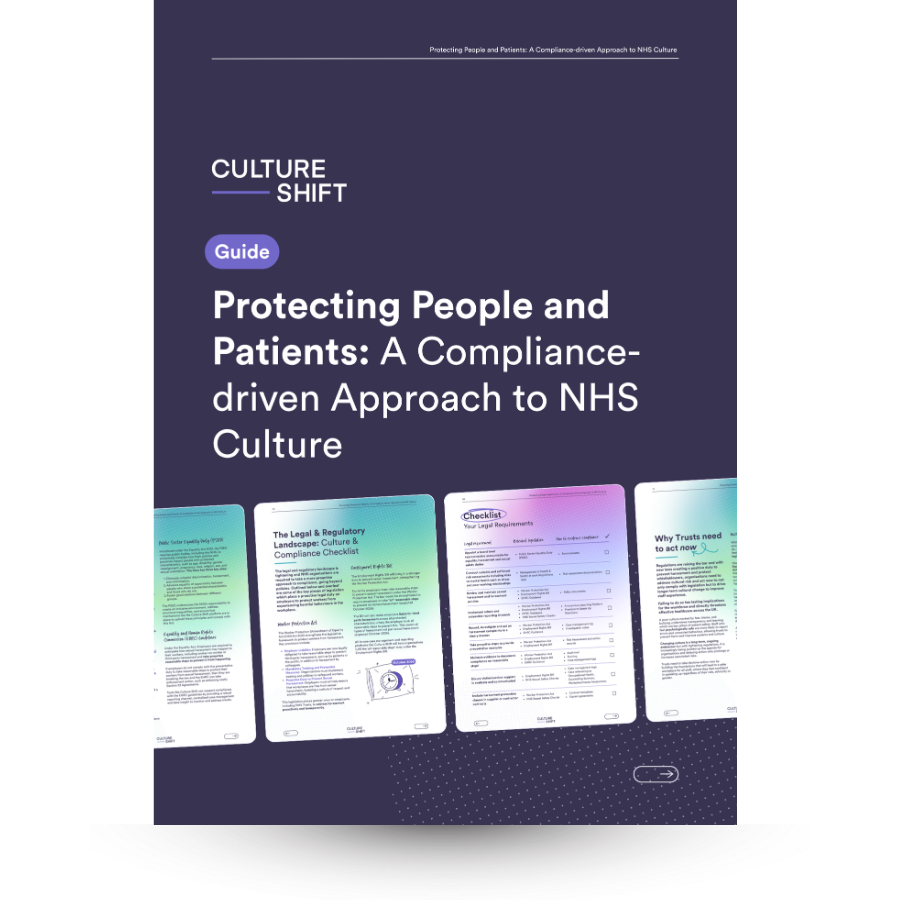
The NHS Sexual Safety Charter sets a clear expectation for Trusts to take a zero-tolerance approach to harassment, sexual misconduct and harmful workplace behaviour. Alongside a tightening legal landscape, NHS organisations are now expected to move beyond policy and demonstrate proactive, evidence-based action to protect staff and patients. This guide explores what the Charter means in practice, how it aligns with broader legal duties, and what Trusts need to do to build safer, more accountable cultures. Download the guide to:

Understand the NHS Sexual Safety Charter and how it aligns with UK legislation and regulatory expectations

Identify key risk areas across reporting, culture, leadership accountability and third-party behaviour

Learn what effective compliance looks like in practice, including governance, training and data monitoring

Build a practical framework for improving sexual safety, reporting confidence and organisational transparency
The reality in numbers
Harassment, bullying and abuse remain persistent challenges across the NHS, but confidence in speaking up - and trust in what happens next - continues to lag behind. While some staff do report concerns, The NHS Staff Survey revealed a significant proportion still do not feel safe to do so, limiting visibility of risk and preventing meaningful action.
54%
only half reported harm
54% of staff experiencing harassment, bullying or abuse said they or a colleague reported it, highlighting that reporting does happen, but not consistently across the workforce.
38%
don't feel safe
38% say that they felt safe to speak up about anything that concerns them in their Trust, pointing to ongoing barriers around trust, culture and psychological safety.


More about our NHS Sexual Safety Charter Guide
The NHS Sexual Safety Charter was introduced to address persistent issues of harassment, bullying and sexual misconduct across healthcare settings. It sets out a clear commitment for NHS organisations to take a zero-tolerance approach to harmful behaviour and to create safer environments for both staff and patients.
This guide brings together the Charter’s principles with the wider legal and regulatory landscape shaping employer responsibilities across the NHS. It outlines how requirements under legislation such as the Worker Protection Act and Public Sector Equality Duty intersect with the Charter, reinforcing the need for proactive prevention, effective reporting mechanisms and clear accountability at board level. It also explores the reality of workplace culture within the NHS, highlighting the scale of harassment and misconduct experienced by staff, the barriers to reporting, and the unequal impact on different groups across the workforce.
Alongside this, the guide sets out the practical steps Trusts are expected to take - from implementing accessible and trusted reporting channels, to conducting risk assessments, delivering targeted training and maintaining clear, auditable records of action taken.
Download your copy
FAQs
Questions? We've got answers.
The NHS Sexual Safety Charter is a framework introduced in 2023 that commits NHS organisations to a zero-tolerance approach to sexual harassment, misconduct and harmful behaviour, supported by a set of core principles for improving workplace safety.
The Charter itself is not legislation, but it sits alongside legal duties such as the Worker Protection Act and Public Sector Equality Duty, which require employers to prevent harassment and discrimination.
Organisations are expected to take a proactive approach to preventing harassment, including implementing reporting systems, conducting risk assessments, providing training, and ensuring leadership accountability.
Barriers to reporting include fear of being seen as over-sensitive, lack of trust in reporting processes, and concerns that no action will be taken. This contributes to underreporting of workplace harassment.
Data is critical for identifying patterns of behaviour, understanding risk areas, informing leadership decisions and demonstrating that organisations are taking proactive steps to improve workplace culture.
Culture Shift supports NHS organisations through anonymous reporting tools, centralised case management and data insights, helping Trusts identify risks, respond effectively to reports, and evidence action taken to improve workplace culture.
Still have questions?
The ever-changing regulatory landscape can be tricky to navigate - we're here to guide you through what your organisation needs to do to stay compliant and protect your people.


Your partner in preventing workplace misconduct
Misconduct rarely starts as a headline issue - it starts with something small that goes unaddressed. Culture Shift helps organisations surface concerns early, respond consistently, and embed long-term cultural change through our Report + Support™ platform, trauma-informed training programmes, and community-led best practice.