The Tribunal Risk HR Leaders Can't Ignore

Featured in HR News, our latest research in the Culture Shifters Annual Report 26-27 reveals a stark gap between how confident HR professionals feel about sexual harassment compliance and what they can actually prove. Of 300 senior UK HR professionals surveyed, 91% said they're confident their organisation could evidence taking "all reasonable steps" to prevent sexual harassment if challenged today. But when asked to demonstrate specific measures, the evidence often isn't there. Only half can show clear reporting processes are in place. Only a third have measures to prevent retaliation.
From October 2026, the Employment Rights Act requires all employers to take "all reasonable steps" to prevent sexual harassment, with new liability for harassment by third parties such as suppliers, clients, and contractors.
Gemma McCall, co-founder and CEO of Culture Shift, sees the disconnect clearly:
"While most HRs understand the importance of getting this right there's currently a sizable gap between confidence and having audit-ready evidence."
Confidence and evidence are two different things. An organisation can believe it handles harassment well and still have nothing to show for it at tribunal. Talking about prevention isn't the same as documenting it, and only one of those holds up under scrutiny.
Gemma points to where that gap becomes expensive:
"The gap between employer confidence and capability is precisely where tribunal risk lives, and it's often the run-up to tribunal, not the hearing itself, where employers really take the financial hit."
With tribunals now able to increase compensation awards by up to 25% where the preventative duty hasn't been met, the cost of that gap is rising too.
Read the HR News article to learn more about the risks associated with speak-up culture and workplace misconduct.
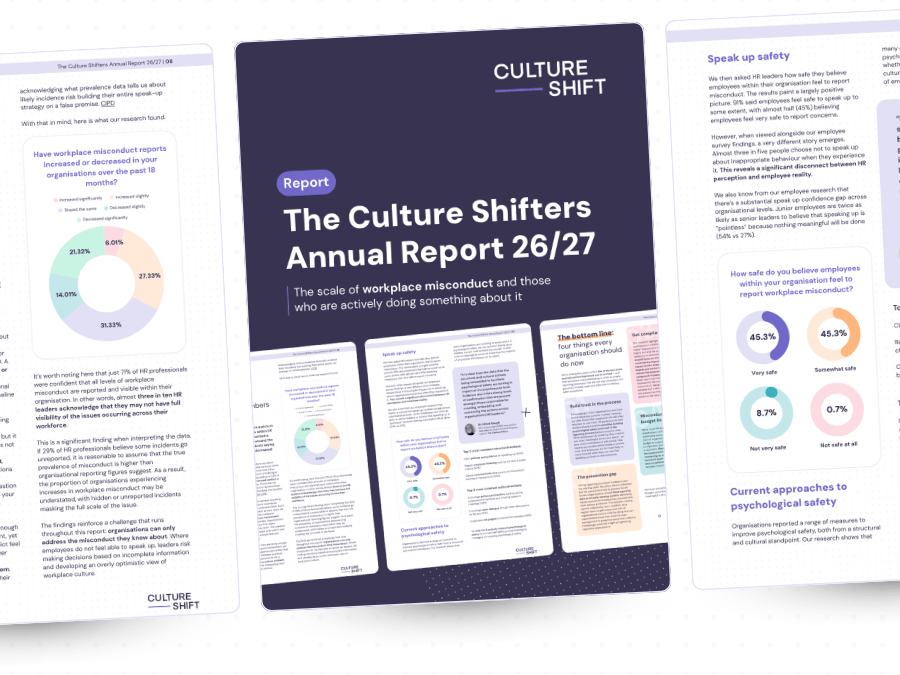
Read the full findings in the Culture Shifters Report 26/27
.png)
What we're reading
Latest insights from the front lines of workplace culture.

5 Things Every FE Provider Should Do Under the New Ofsted Toolkit
Ofsted's new FE toolkit grades inclusion separately. Colchester Institute's Stefan Jordan shares five steps to evidence impact and prepare for inspection.



Feeling inspired?
Take the first step toward preventative misconduct management with a demo of our Report + Support™ platform. We can show you how to breakdown reporting barriers with anonymous 2-way messaging, and how to act before things escalate with name-matching and pattern-spotting across our analytics dashboard.