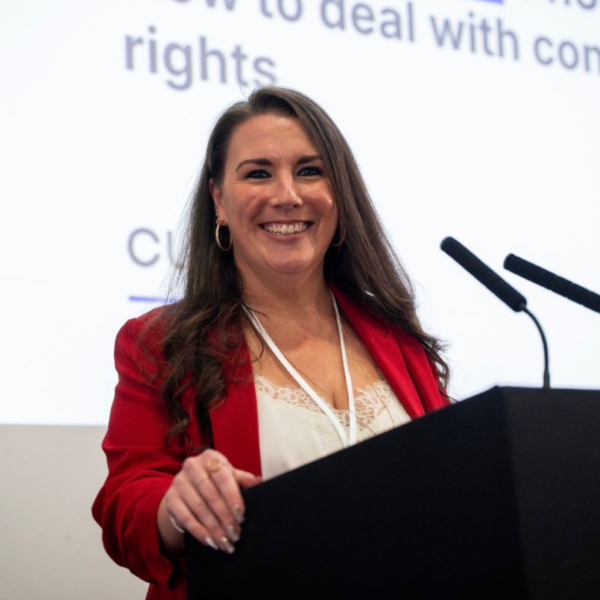
Gemma McCall
Gemma is the multi-award-winning CEO and co-founder of Culture Shift. Since launching our groundbreaking Report + Support™ system in 2018 (developed in collaboration with the University of Manchester) Gemma has grown the platform to serve organisations across the UK and Ireland, including universities, NHS trusts, and major employers. Having raised over £5 million in VC funding, she's one of a small number of female founders to have scaled a purpose-led tech company to this level, and she's just getting started! A sought-after voice on workplace harassment and inclusion, Gemma collaborates with organisations including the Equality and Human Rights Commission, and is relentless in her pursuit of a world where everyone feels they belong - and feels safe enough to say when they don't.
In the spotlight
We put your burning questions to CEO and Co-founder of Culture Shift, Gemma McCall.
Gemma, tell us about your career history and expertise
My career has been defined by a belief that technology can be a genuine force for good - not just for profit, but for people. I co-founded Culture Shift in 2018 after working closely with the University of Manchester to build what became the Report + Support system: a platform that gives individuals a safe, structured way to speak up about harassment, bullying, and discrimination. What started as a single collaboration has grown into something used by over 100 organisations across all sectors, and the expertise we've built along the way - in behaviour change, organisational culture, and the psychology of speaking up - is genuinely unlike anything else in this space. I've raised over £5 million in VC funding, built a team of 25 brilliant people, and along the way I've become a go-to voice on workplace harassment and inclusion at a national level.
Why did you start Culture Shift?
I experienced maternity discrimination through both of my pregnancies, and that lit something in me that I haven't been able to switch off since. It gave me a very real, very visceral understanding of what it feels like to be on the receiving end of behaviour that chips away at your confidence and your sense of belonging. I knew I wasn't alone, and I knew that the systems most organisations had in place to deal with these things were completely inadequate. So we built something better. Culture Shift exists because I believe no one should have to navigate that kind of experience without support, and no organisation should be in the dark about what's really happening in their culture.
What does it mean to be the CEO at Culture Shift?
It means practising what we preach, every single day. I can't stand up and talk about the importance of speak-up cultures and then not create one at Culture Shift itself. So a huge part of my role is making sure that we are genuinely walking the walk, and that our team feel safe, supported, and heard, and that we're always open to learning and adapting. Because human beings are complicated, and dealing with interpersonal dynamics well takes real commitment. It doesn't just happen because you say it's a priority.
There's also a constant balancing act between being mission-driven and being commercially focused. I think some people assume those two things are at odds with each other. They're not. In fact, I'd argue that if you lose sight of the commercial reality, you lose the ability to pursue the mission at all. Keeping the doors open is part of the mission. Getting that balance right is one of the most demanding and most interesting parts of this job.
What do you find most interesting about the tech-for-good space?
The thing that fascinates me is that compliance, risk management, and positive cultural impact are not mutually exclusive. They should be seen, and funded, as one and the same thing. But too often, tech for good gets written off as a "nice to have." The moment an organisation hits economic headwinds, the culture and people investment is the first thing to get squeezed, even though protecting your people, building inclusive environments, and investing in belonging all lead to measurably better business outcomes.
Risk and compliance will always get funded, because every board has a risk register. What I find interesting (and what I think is starting to shift) is the growing recognition that your people are your biggest risk. And that investing in culture is strategic.
What does the future look like at Culture Shift, and what are you most excited about?
I'm most excited about moving the conversation (and the product) beyond the tick-box. For too long, "speak up culture" has been treated as something you can achieve by dropping a reporting link in your staff handbook. It can't. What we're focused on now is demonstrating how earlier, informal intervention in interpersonal conflict actually saves organisations significant money. This is because the alternative is letting things escalate into formal grievances, disciplinary processes, legal disputes, and employment tribunals. That's expensive in every sense.
The silence gap is still enormous. Across most sectors, the vast majority of people who experience something that affects them at work never formally report it. This is a culture problem. And I'm genuinely excited about what Culture Shift can do to close that gap: making it feel natural, not courageous, to say "that made me uncomfortable." When we get there, organisations will be healthier, more productive, and more human. And people will actually want to come to work. That's the future I'm building towards.
What
Gemma
's
reading
Latest insights from the front lines of workplace culture.

5 Things Every FE Provider Should Do Under the New Ofsted Toolkit