The Hidden Costs of Workplace Misconduct in Financial Services
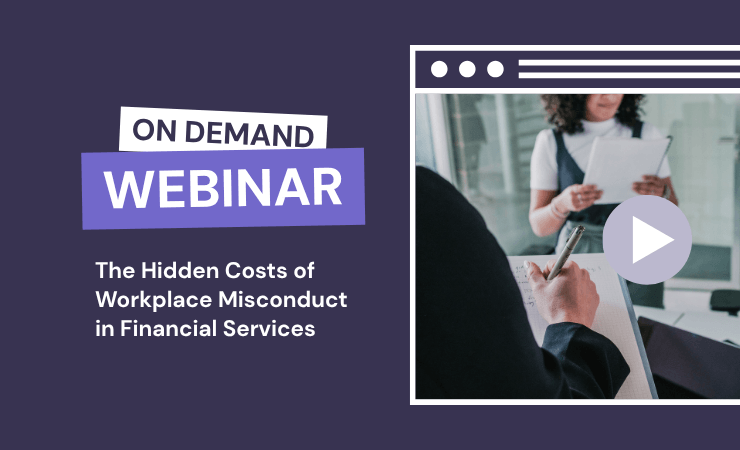
Workplace misconduct comes at a cost, but many organisations only see part of the picture.
While tribunals and settlements can carry a significant financial burden, the wider impact is often hidden in increased absenteeism, reduced productivity, employee turnover, recruitment costs and reputational damage.
Join Ash McDowell, Chief Financial Officer at Culture Shift, and Christine Bonney, Head of Culture Transformation, as they explore the true cost of workplace misconduct in financial services and what organisations can do to reduce both risk and cost.
Using sector-specific data, Ash demonstrates the potential financial impact of workplace misconduct across financial services organisations of different sizes, helping leaders across HR, Compliance, and Finance better understand where costs arise and how they accumulate over time.
Christine then explores the cultural factors that can contribute to misconduct within financial services environments, including power imbalances, barriers to speaking up and the challenges organisations face when issues go unreported.
In this session, we explore:
- The direct and indirect costs of workplace misconduct in financial services
- How absenteeism, turnover and lost productivity impact organisational performance
- The financial implications of investigations, grievances, tribunals and settlements
- Cultural factors that can increase risk, including power dynamics and barriers to reporting
- How organisations can identify and address issues before they escalate
- Practical strategies to reduce risk, improve culture and demonstrate measurable savings
.png)
What we're reading
Latest insights from the front lines of workplace culture.

5 Things Every FE Provider Should Do Under the New Ofsted Toolkit
Ofsted's new FE toolkit grades inclusion separately. Colchester Institute's Stefan Jordan shares five steps to evidence impact and prepare for inspection.



Feeling inspired?
Take the first step toward preventative misconduct management with a demo of our Report + Support™ platform. We can show you how to breakdown reporting barriers with anonymous 2-way messaging, and how to act before things escalate with name-matching and pattern-spotting across our analytics dashboard.