Blogs, news & views
Stay informed, stay compliant, stay ahead. Explore blogs, articles, news stories, and webinars from industry thought leaders, change-makers, and the Culture Shift team.

Third Party Harassment: The Blind Spot in Most Workplace Harassment Policies
Most harassment policies are built around one scenario: two colleagues, one incident. But a lot of harassment comes from outside the organisation - customers, clients, patients, delegates - and the law is catching up. Learn what third party harassment looks like in practice, where employer liability stands under the Worker Protection Act, and what changes from October 2026 under the Employment Rights Act, including a higher bar for "reasonable steps" and liability from the first incident.
%20(1).png)
The Case for Anonymous Reporting in the TV & Film Industry
MasterChef TV presenters Gregg Wallace and John Torode are the latest celebrities to be involved in high-profile sexual harassment and harassment cases at the BBC, revealing deep cultural failings and systemic issues, not just within the BBC but industry wide.
.png)
Common Challenges: Barriers to Reporting
Most organisations don’t have a reporting problem, they have a visibility problem. It’s an uncomfortable distinction, because it challenges a deeply held assumption: that if something serious is happening, it will eventually be reported. That formal systems, policies, and escalation routes will surface issues before they become systemic.
%20(1).png)
Raising Student Confidence in Reporting Misconduct on Campus
Significant numbers of students are still experiencing harassment and sexual misconduct every year throughout their time at university. A 2022 study in the UK found that 20% of respondents experienced at least one act of attempted or forced sexual touching or rape, whilst 52% experienced at least one act of sexual harassment such as sexist remarks or jokes.
%20(1).png)
How Culture Shift Supports Freedom to Speak Up Guardians
Freedom to Speak Up Guardians (FTSU) play a vital role in supporting the NHS by creating a culture of openness, safety, and continuous improvement. We understand that their primary responsibility is to ensure that hundreds of NHS staff in their Trust feel confident, safe, and supported when raising concerns about anything that could negatively affect patient care, staff wellbeing or organisational integrity.
%20(1).png)
'Corrosive Culture' – The Cost of Bullying in the NHS: How to Address It
The NHS People Plan places compassionate and inclusive cultures at the heart of the NHS, yet unacceptable levels of bullying and harassment still widely exists across the NHS, described by the BMA as a ‘corrosive culture’.
%20(1).png)
How the RUH are Putting Staff Wellbeing at the Centre of Their Patient and People Strategy
A look at how the RUH is putting staff wellbeing, sexual safety and inclusion at the centre of its patient and people strategy.
%20(1).png)
The cost of workplace bullying: What can employers do?
Workplace bullying and harassment is a major problem for employers and affects more than 9 million workers in the UK – that’s more than the population of Wales and Scotland combined. Collectively it costs UK businesses £18 billion per year and according to TUC, it’s the second biggest workplace issue after stress. Acas receives over 20,000 phone calls each year in relation to bullying, signalling it’s a widespread issue that is not being dealt with effectively.
%20(1).png)
Does your HR Software drive a Speak Up Culture?
Establishing a speak up culture isn’t just a nice to have for organisations, it’s an essential part of your people and wider business strategy. The research is clear, organisations with a healthy workplace culture are 21% more profitable than those without* and positive culture is linked to increased levels of productivity, high employee retention and advocacy rates and a better reputation.
.png)
Common Challenges: Culture Transformation
The problem is not that organisations don’t invest in culture, it’s that they misunderstand how it changes. Culture transformation has become a familiar ambition inside most organisations - it shows up in strategy decks, leadership offsites, and company-wide communications.
.png)
Common Challenges: Speak-up Culture
Most organisations say they want a speak up culture, few actually have one. Not because employees are unwilling to speak up, or because they don’t understand how. In most cases, people are perfectly capable of raising concerns.
.png)
Common Challenges: Insight & Reporting Gaps
Most organisations believe they have a reasonably clear view of what is happening in their workplace. They have reporting systems. They have HR data. They have engagement surveys, exit interviews, case management records.
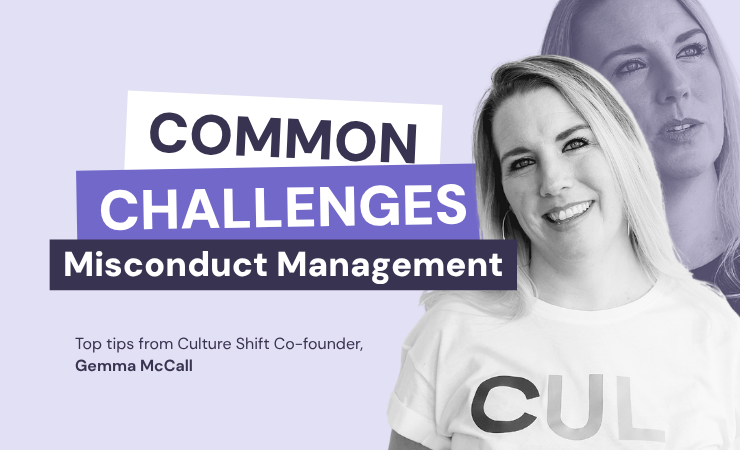
Common Challenges: Misconduct Management
Most organisations believe they have misconduct under control because they have processes for it - policies exist, reporting routes are defined, HR teams are trained, and investigation procedures are documented. On paper, the system looks complete, but misconduct - whether it is harassment, bullying, discrimination, or other inappropriate behaviour - persists.
%20(1).png)
Beyond Finance: How CFOs can act as a culture change leader
If asked to consider who is most likely to champion business culture and fly the flag for cultural change in an organisation, Chief Financial Officers are not necessarily the first people that would come to mind.
%20(1).png)
E6 regulations: 8 reasons to choose Culture Shift for your higher education institution
With the new OfS E6 regulation now in force, here are eight reasons higher education providers are choosing Culture Shift to meet the new student protection duties.
%20(1).png)
Why business leaders can’t recognise sexual harassment in the workplace
When it comes to investing in business culture, one of the most common rebuttals we come across from business leaders is the belief that there is no unwanted behaviour happening in their organisation. In their eyes, they don’t need to make improvements to their workplace culture or have any need for an anonymous reporting platform because they aren’t aware of its existence.
%20(1).png)
6 reasons to invest in an anonymous reporting platform for employees
Investing in an anonymous reporting platform for employees is a step towards creating an open and ethical work environment. With regulatory and employee expectations on the rise, an anonymous reporting tool is an essential investment for modern HR leaders.
%20(1).png)
7 questions to ask when implementing an anonymous misconduct reporting platform
Choosing the right employee misconduct anonymous reporting platform software is vital to help you improve reporting rates, understand what is truly happening in your business, giving your employees a safe and secure way to report misconduct in the workplace and building a speak up culture.
.png)
Common Challenges: Whistleblowing Prevention
Whistleblowing can feel like a taboo word. A serious, scary consequence of systemic failures. A media headline. Risk, reputation, regulatory exposure. Employees are told how they can blow the whistle if they need to, while organisations hope the need never arises. But whistleblowing itself is not the problem to be managed.
%20(1).png)
Better HR data, better culture: Using HR software to shape workplace culture
Data-driven decision making has become a non-negotiable for organisations because it allows CEOs, C-Suite and managers to monitor, track and improve their KPIs based on real information rather than relying on guess work.
%20(1).png)
Human sustainability – using culture to drive value for people & business
In today’s economy, people are at the centre of almost all that we do. For most organisations, people drive everything of value to them from IP and innovation, adaptability and attitude towards risk, through to productivity, retention and ultimately revenue.
%20(1).png)
Culture Shift Awards 2025 recognise change-makers
On the 19th of March 2025, in a night dedicated to recognising individuals and teams making a real difference, Culture Shift celebrated those working tirelessly to foster safer, more inclusive environments across workplaces and educational institutions. The awards honoured those committed to ending harmful behaviours, often working behind the scenes to create lasting change.
.png)
Improving sexual safety in the NHS – implementing effective anonymous reporting
To date, more than 270 organisations have signed the NHS Sexual Safety Charter, including all 215 NHS Trusts and 10 ambulance bodies in the UK their commitment to improving sexual safety in the NHS. If you’re part of one of those organisations, you already understand the scale of the problem and by signing the charter have made a commitment to improving sexual safety and other unwanted behaviour in your Trust such as sexual misconduct, violence, microaggressions, bullying and harassment. Tackling these harmful behaviours headfirst will contribute to driving systemic change across the NHS making it a safer, happier place to work.
%20(1).png)
Transforming toxic workplaces by developing employee voice
Employee engagement in the UK is chronically low, a 2023 survey found a staggering 90% of employees feel disengaged at work, lacking enthusiasm for their role. Toxic workplace cultures play a large role in employee disengagement and poses multiple challenges for organisations. 75% of UK employees have experienced a toxic work culture at some point in their career, with 85% of respondents saying toxic culture has negatively affected their mental health.
%20(1).png)

Feeling inspired?
Take the first step toward preventative misconduct management with a demo of our Report + Support™ platform. We can show you how to breakdown reporting barriers with anonymous 2-way messaging, and how to act before things escalate with name-matching and pattern-spotting across our analytics dashboard.