Leveraging Data to Drive Organisational Culture Change
%20(1).png)
While change is a constant in life, intentionally changing organisational cultures takes time and a focused, planned approach. Knowing what you are seeking to change and what success looks like is essential for effectively monitoring progress over time. Failure to monitor progress over time can lead to feelings of hopelessness and cause initiatives to be shelved before they have had a meaningful impact on the organisation.
No Quick Wins in Addressing Culture-Damaging Behaviours
When it comes to addressing culture-damaging behaviours there are no quick wins. Shifting behaviour, building trust, providing appropriate and tailored support and implementing resolutions which prevent behaviours from reoccurring are all time-intensive efforts.
Most organisations go through several stages to achieve lasting change, from precontemplation to leading practice. One of the more challenging phases is maintenance, as it demands trust in your long term objectives and the ability to find renewed energy to keep driving progress.
The Importance of Data in Understanding Organisational Culture
Data is essential for tracking changes in behaviours and experiences over time within your organisation. Understanding what is happening within your organisation is vital, as you can’t change what you don’t understand.
There are two ways to collect information on what is happening within your organisation
- Whole population research, also known as prevalence data, and targeted sampling. Prevalence data is typically collected through a survey but can also be obtained by conducting focus groups or interviews with a representative sample of your population. To qualify as prevalence data, these methods must include individuals who have experienced culture-damaging behaviours and those who have not.
- The second way is reporting data, which provides detailed insights directly from people who have experienced culture-damaging behaviours. Culture Shift’s platform enables you to collect both informal and formal reporting data, allowing individuals to submit information anonymously or with contact details.
Why Collect Both Prevalence and Reporting Data?
Culture Shift recommends organisations collect both prevalence and reporting data. The value in collecting both data sets lies in the ability to measure change over time, helping you to determine if your interventions are having an impact.
Long-Term Impact: Reducing the Gap Between Prevalence and Reporting
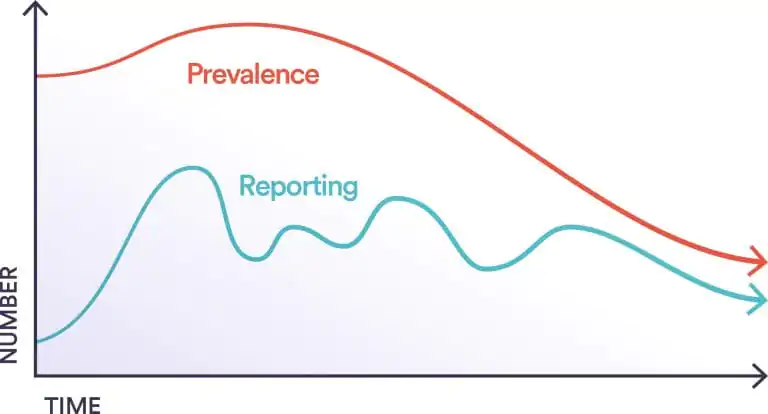
One of our theories of change suggests that organisations early in their journey may see an increase in reporting, this reflects the growing trust within your organisation and a better understanding of what your people are experiencing.
Over time, prevention activities should ultimately decrease the prevalence of unacceptable behaviours., However, there may be temporary increases as people become more aware of what constitutes unacceptable behaviours and are less willing to tolerate it, resulting in more people coming forward to report such experiences.
Ultimately, our goal is to minimise the gap between prevalence and reporting. The diagram below illustrates our theory of change and represents the ambition we share with every partner we work with.

What we're reading
Latest insights from the front lines of workplace culture.

5 Things Every FE Provider Should Do Under the New Ofsted Toolkit
Ofsted's new FE toolkit grades inclusion separately. Colchester Institute's Stefan Jordan shares five steps to evidence impact and prepare for inspection.



Feeling inspired?
Take the first step toward preventative misconduct management with a demo of our Report + Support™ platform. We can show you how to breakdown reporting barriers with anonymous 2-way messaging, and how to act before things escalate with name-matching and pattern-spotting across our analytics dashboard.