Tackling the trend of Gen Z conscious quitting
%20(1).png)
What is “conscious quitting”?
Conscious quitting has become quite a popular buzzword recently, especially among Gen Z. And it’s stirring up a lot of conversations in and out of the workplace. And Gen Z are doing it the most. But what is it?
It describes employees leaving their current workplace for companies that better align with their environmental and social values. At Culture Shift we know this is something that is very important to more and more people. Even 9 in 10 consumers are more inclined to buy from a brand whose values align with their own, according to a survey by Yopto.
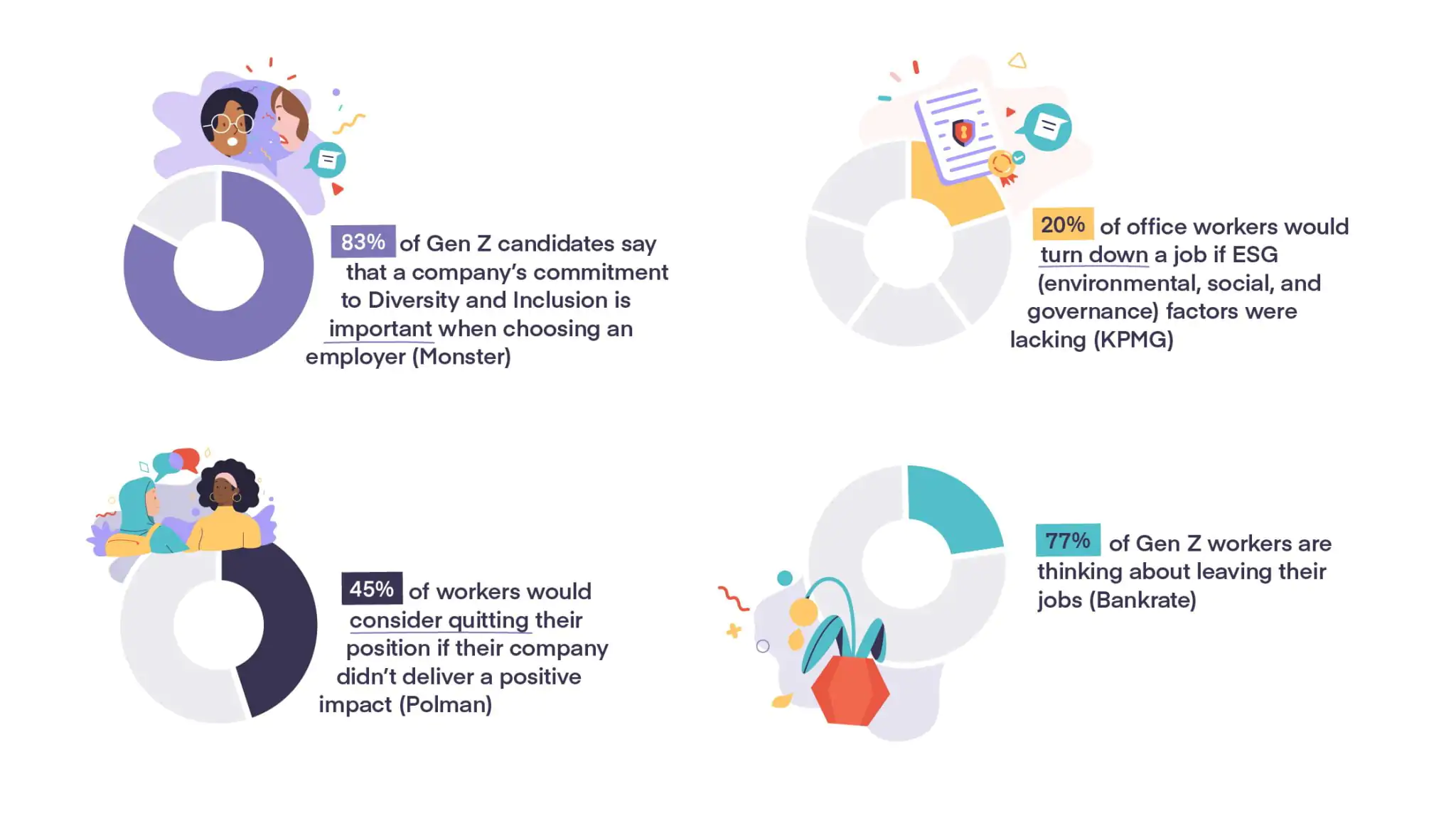
Research shows:
Conscious quitting vs. quiet quitting among Gen Z
Conscious quitting should not be confused with quiet quitting, which describes individuals doing the bare minimum at work instead of going above and beyond. However, the definition of quiet quitting can also change slightly depending on different contexts. Again, it has been a “trend” seen more in Gen Z.
For example, the above description can simply be seen as people doing only as much work as is required and not putting in any effort, leading some to call those who do “lazy”. To others, quiet quitting is more like prioritising a healthy work-life balance and means people are doing enough but not at the expense of mental health and wellbeing or their private life. It has been seen as a prevention of burnout and a way to avoid a potentially toxic workplace culture.
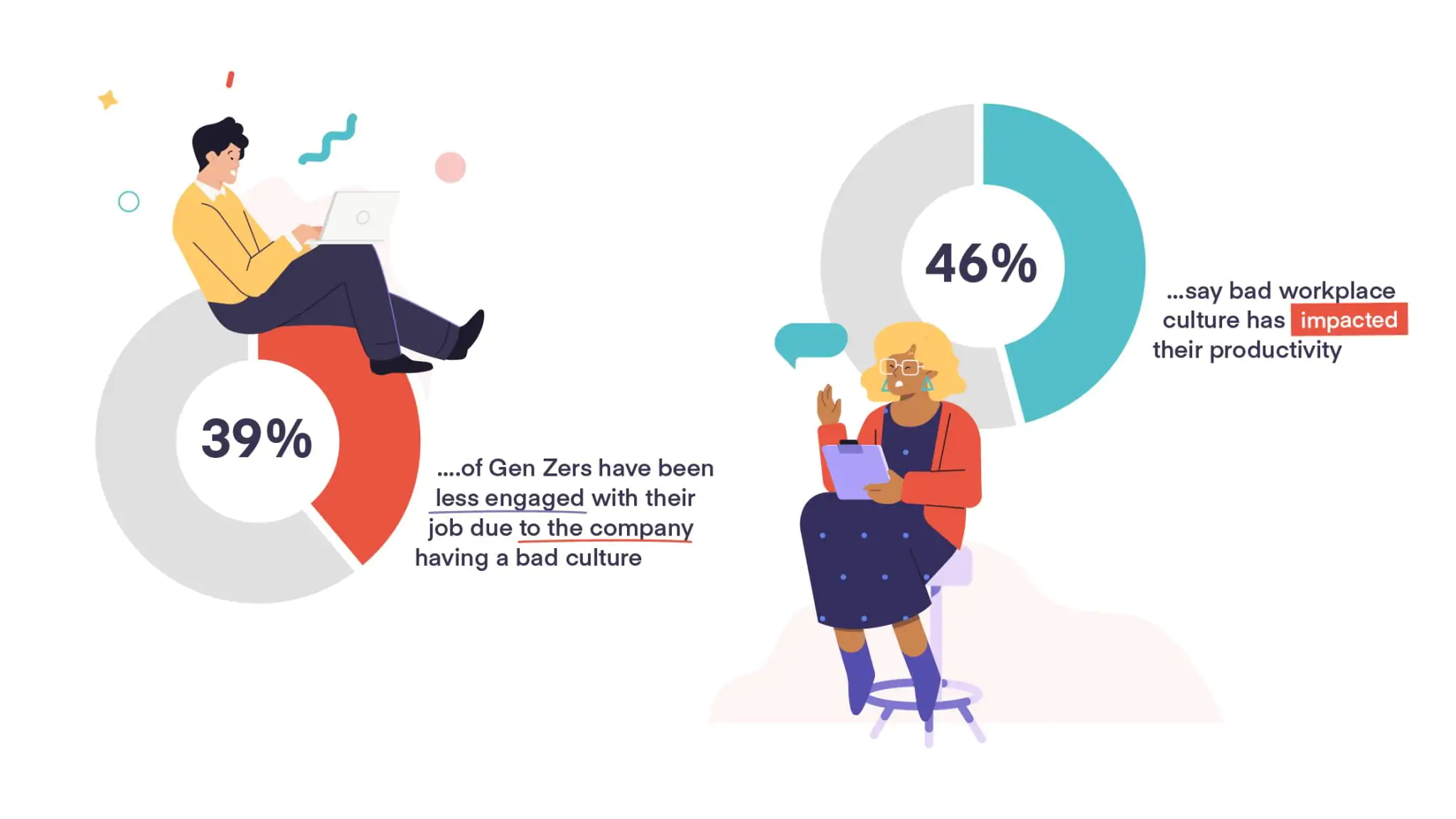
Statistics from research we did on the impact of problematic behaviour at work showed that 39% of Gen Zers have been less engaged with their job due to the company having a bad culture and 46% say bad workplace culture has impacted their productivity. This could be responsible for so called “quiet quitting”, which despite its name doesn’t necessarily mean quitting your job at all.
Conscious quitting on the other hand, is the act of employees intentionally quitting a job and leaving that company for moral and ethical reasons.
Why is conscious quitting more common amongst Gen Z?
As more jobs are actually on the market than there are candidates looking for jobs, many important factors come into play that drive people to search for new opportunities. These could be better salary and benefits, options to work hybridly or completely remotely, or a company’s employee demographic makeup, reputation and workplace culture, which includes their ESG (Environmental, Social and Governance), CSR (Corporate Social Responsibility) and ED&I (Equality, Diversity and Inclusion) commitments and policies. This also means they are less likely to stand for problematic behaviour such as bullying, discrimination and harassment happening. Our research found that nearly half (49%) of those surveyed have previously left a job due to a bad workplace culture.
Some have commented that Gen Z are conscious quitting because younger people are more aware of changes in society, environmental impacts and understand how they are key to how businesses will function in the future. As is often said – including at Culture Shift – Gen Z are the workforce of tomorrow.
However, while companies should be embracing Gen Z and the changes and perspectives they bring, many are doing the opposite. A Resume Builder survey found nearly half (49%) of managers are finding Gen Z ‘difficult to work with’ and nearly 3 in 4 (74%) said they were more difficult to work with than other generations.
Preventing Gen Z from conscious quitting
Ensuring you are both retaining and appealing to Gen Z talent to prevent them from conscious quitting and encouraging them to join your organisation instead of another is imperative for the future of your business.
Here are 3 tips we have for doing just that:
1. Invest in ED&I, ESG and CSR
With ED&I, ESG and CSR initiatives on the rise and their importance being at the forefront of many Gen Zers’ minds, it has also never been more important for employers to take proactive steps towards commitment and progress in these areas.
By investing in these initiatives, putting strategies in place that intertwine with your company’s values and mission and ensuring you are following through on them and measuring the outcomes, this will strengthen your position as an attractive organisation.
Furthermore, if a company’s values and mission are not clearly defined, this has been said to sway their opinions. And when it comes to workplace culture and reputation, caring for your employees and showing that should be a top priority. Having an anonymous reporting system that allows employees to disclose incidents of bullying, discrimination and harassment so you can take action to rectify such issues could really help.
2. Make the entire package attractive
43% of Gen Zers say they would quit a job if it didn’t offer a good work-life balance. From the personal and career development opportunities you offer to flexible working, and from a salary in line with expectations to benefits that encompass health and wellbeing or other perks, candidates have so many more job options and compensation packages to choose from. Having these in place as well as clear strategies and initiatives, will help you stand out as an organisation people want to work at.
3. Communication is key
Listening to Gen Z employees and establishing ways to work with them is extremely important if you want to attract and retain them as well as improve business functions. This includes taking the previous two points into consideration.
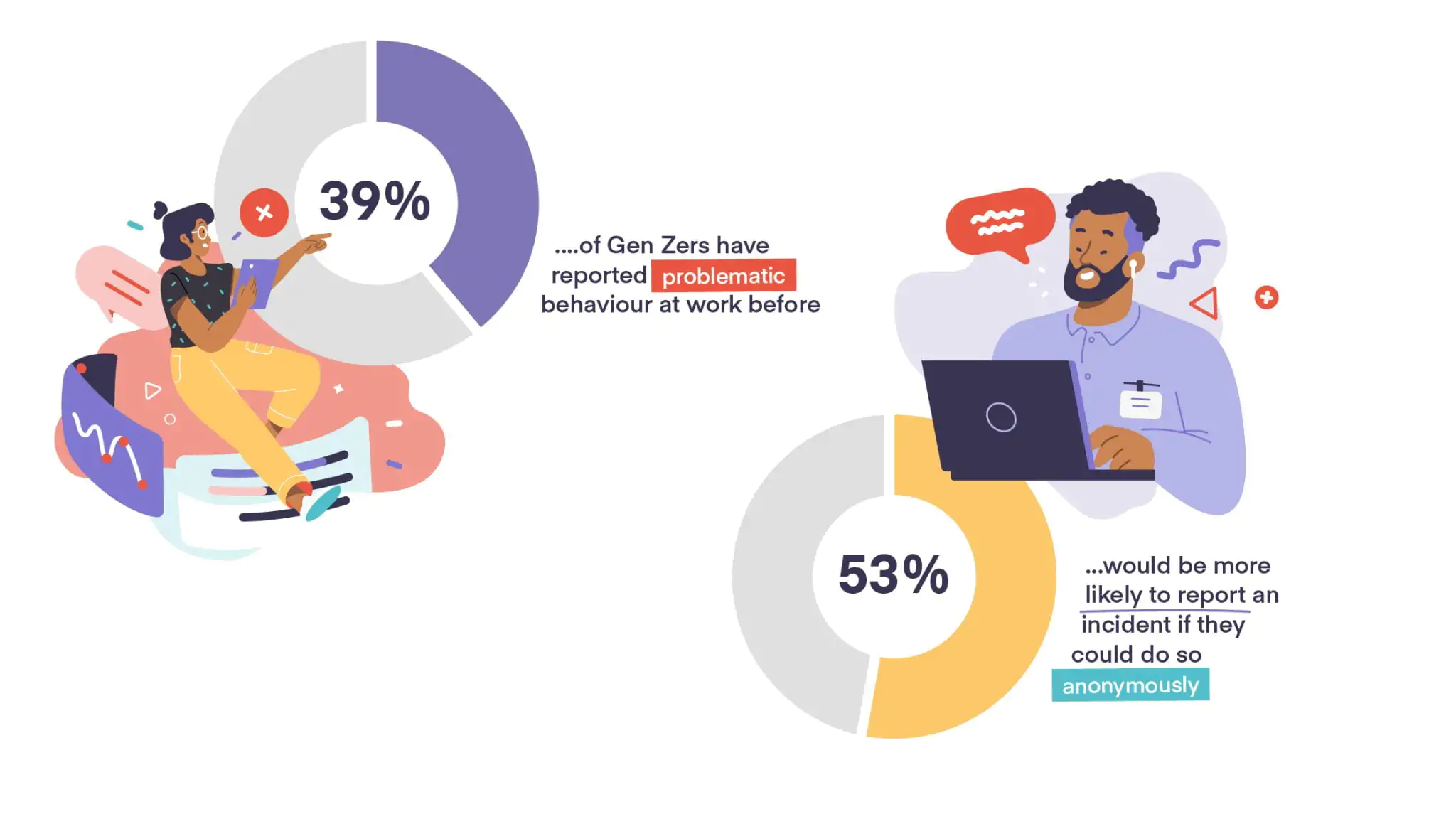
One thing we have found from working with corporate partners is an increase in requests from younger employees who are mainly recent graduates for an anonymous reporting platform. Why? Our research shows that 39% of Gen Zers have reported problematic behaviour at work before and 53% would be more likely to report an incident if they could do so anonymously. In addition, more often than not they will have come from a university that has implemented our system in the last 5 years. Therefore employers should not be exasperated by the so-called demands of Gen Z but try to understand why such “demands” could actually be a benefit to the company.
Summary
There is no escaping the inevitable – 27% of the workforce will be Gen Z by the end of 2025 – so resisting their ideas should not be done so rashly. And with many workplaces – including our partners EY, Macfarlanes and Praetura, trying to appeal to more graduates – this is even more imperative.
Ensure Gen Z – or in fact any generation of workers – are not conscious quitting, by bringing your business up to speed with societal changes and the environmental future. Because wherever you look for statistics on how businesses who do so fare compare to those who don’t, they all show the same outcome.
Additionally, the phenomenon of quiet quitting should also be addressed in the workplace. Make sure you are actively encouraging a healthy work-life balance and tackling a potential toxic workplace culture in your organisation rather than viewing those who are “quiet quitting” with a critical eye.

What we're reading
Latest insights from the front lines of workplace culture.

5 Things Every FE Provider Should Do Under the New Ofsted Toolkit
Ofsted's new FE toolkit grades inclusion separately. Colchester Institute's Stefan Jordan shares five steps to evidence impact and prepare for inspection.



Feeling inspired?
Take the first step toward preventative misconduct management with a demo of our Report + Support™ platform. We can show you how to breakdown reporting barriers with anonymous 2-way messaging, and how to act before things escalate with name-matching and pattern-spotting across our analytics dashboard.