How retail and hospitality can avoid EHRC’s Section 23 agreements
%20(1).png)
What do renowned retail and hospitality companies such as Sainsbury’s, McDonald’s and IKEA all have in common? They’ve signed EHRC’s Section 23 agreement because of incidents of and failings to prevent problematic behaviour – in particular, sexual harassment. By agreeing to EHRC’s Section 23 agreement, an organisation commits to not breaching equality law, usually in a specific area where there have been previous concerns.
Recent years have been extremely tough for the retail and hospitality industries (which for the purposes of this blog will encompass catering and leisure), but one thing that has been a constant problem before the pandemic is known cultures of bullying and harassment.
They are two of the largest industries in terms of numbers of employees. However, they also have the highest employee turnover rates that different studies show range from 30% to almost 60%. The national average is around 15%.
Reasons could include that for many, these industries are used as first jobs or stepping stones and therefore the majority do not plan to stay long in them anyway, or because of the well-documented level of abuse employees face from customers. This has driven mental health issues up that have then caused employers to look at safeguarding wellbeing.
Another reason could be the cost of living crisis and low pay, the latter of which retail and hospitality are known for. But what we also know, particularly through our own research, is that 2 in 5 employees in retail and hospitality have experienced bullying, discrimination or harassment from colleagues, 45% of them have witnessed it happening before and 35% have left a job before because of it.

In this blog we will talk about those issues that are often left unsaid in these industries and therefore often left to get out of hand, and how they can be prevented from doing so.
Bullying and harassment in the retail and hospitality industries
Bullying and harassment in retail and hospitality have been publicised more and more in the last few years. In addition to those who have signed EHRC’s Section 23 agreement, discrimination cases have been brought to others such as Jaguar Land Rover (who have also signed it), Abercrombie & Fitch and Superdry, while reports of toxic cultures at BrewDog, Victoria’s Secret and Nike, as well as the behaviour of moguls like Sir Philip Green, Mike Ashley and Elon Musk have rocked their reputation as well.
So how can this be stopped? You can watch this video here of how to act now to prevent the EHRC’s technical guidance costing you in the future.
Preventing bullying and harassment and EHRC’s Section 23 in retail and hospitality
We believe effectively preventing workplace bullying and harassment comes down to three key areas: education, communication and accountability. These are outlined in our three tips:
1. Maintaining culture across branches
One major blocker some may come across is embedding a positive and consistent workplace culture within retail and hospitality when there are multiple branches and chains across the country or even world. While companies will likely have guidelines, values and policies that are iterated, actually managing them and keeping on top of them can be a challenge.
It is important Head Office and managers – both regional or area and store management – find ways to ensure expectations around conduct and how the business should be represented at every level are clear and known by all.
2. Rolling out comms and training
Much of the way in which employees are made aware of the aforementioned can be centralised and easy to access, by the way of using apps and intranets to circulate information. Organisations should first train managers on areas such as employee conflict, diversity and inclusion, and inclusive hiring practices and sessions like managing micro-aggressions, anti-racism, and being active bystander should be cascaded down.
Research by Harvard Business Review shows that the average age for a first-time manager is 30, but 40 is the age where people first embark on leadership training. Therefore it is essential leadership skills are developed in tandem with store management skills. This holds managers accountable for how their people are managed just as much as how all employees are responsible for making workplaces inclusive and safe for everyone. It harks back to what Alastair Swindlehurst, Founder of EZHR, says about equipping managers to deal with bullying in the workplace, which you can watch below.
3. Providing an anonymous reporting route
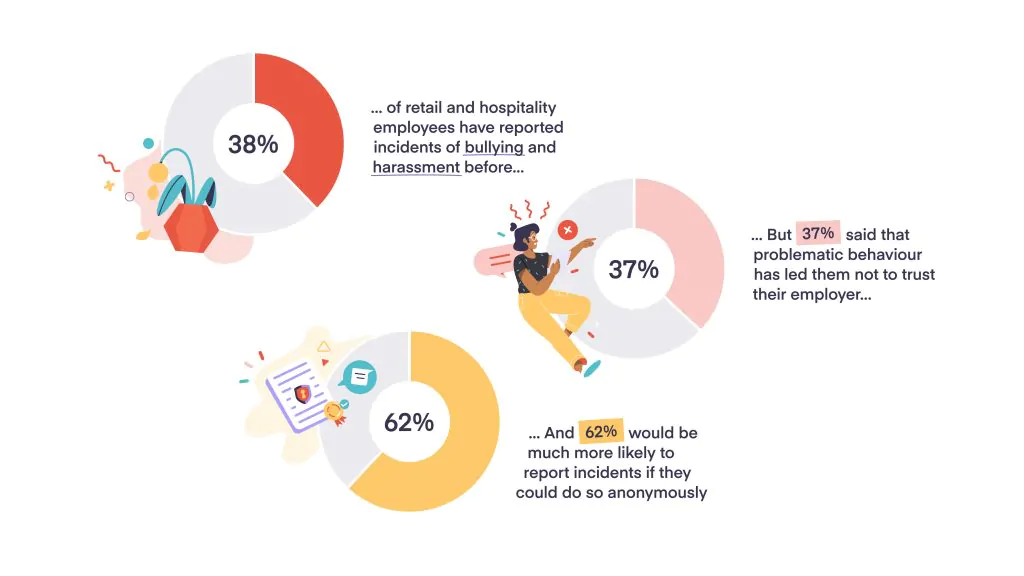
38% of retail and hospitality employees have reported incidents of bullying and harassment before, but 37% said that problematic behaviour has led them not to trust their employer. This could be because they weren’t believed, nothing was done or they faced further problems when they spoke up. Additionally, 30% wouldn’t share their concerns in annual employee surveys, which shows that while conducting them might gauge ideas around engagement, wellbeing and other aspects of work, they are not always enough. However, we did find that 62% would be much more likely to report incidents if they could so anonymously.
Our anonymous reporting system can be managed centrally by dedicated team members and you have control over questions that are asked, meaning those making disclosures do not have to worry about being identified more easily. For example, you do not have to ask if an incident took place in a specific branch, or for identifying characteristics of the victim or the perpetrator. You also have the option of adding “third party” or “customer” to the question of who they are reporting, which allows you track and manage incidents not instigated by employees. A staggering 90% of retail workers and 75% of those in hospitality have been abused by customers at work, and we have previously written about the prevalence of third-party harassment in the workplace.
Of course, thorough communication so that all employees know it’s there to use and what for is essential in order for it to work. You can read more about what you can do with reports, with examples from some of our partners such as Praetura, EY and more, here.
What happens if you don’t prevent bullying and harassment?
The consequences of not preventing bullying and harassment in the workplace can cost millions in revenue and productivity or payouts or a company’s reputation. Others include lost talent, increased stress and stricter guidelines to follow.
People will be affected
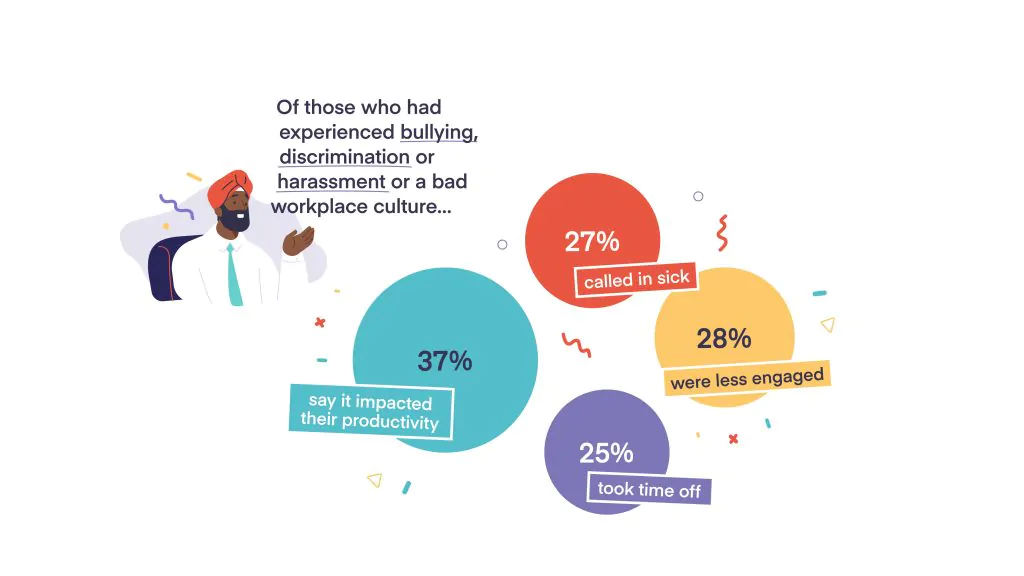
Never has the mental health and wellbeing of employees been more affected and prominent than now. However, one thing we can attest is a big reason for many is the prevalence of bullying and harassment. 41% of retail and hospitality employees say a problematic workplace culture or an incident has impacted their mental health. Others statistics show:
Damaged reputation
70% of employees in retail and hospitality wouldn’t accept a job with a company known for having a bad culture. The average overall is already high at 66%. When there are more jobs available that there are people looking, everything from salary and benefits to diversity and inclusion, and from company culture to reputation matters to many candidates when it comes to choosing an employer.
Both negative press and current or former employees can sway people’s decisions. Our research also showed that 45% wouldn’t even apply for a job known for having a bad culture and 42% would leave a bad Glassdoor review to warn others.
Signing EHRC’s Section 23
As mentioned before, Sainsbury’s, McDonald’s, IKEA and Jaguar Land Rover are just a few retail and hospitality companies that have all had scandals they immediately tried to rectify by signing EHRC’s Section 23 agreements. This shows they are working to improve areas under the Equality Act 2010 which have come under the spotlight, but also that problems have got to a certain stage that needs investigating.
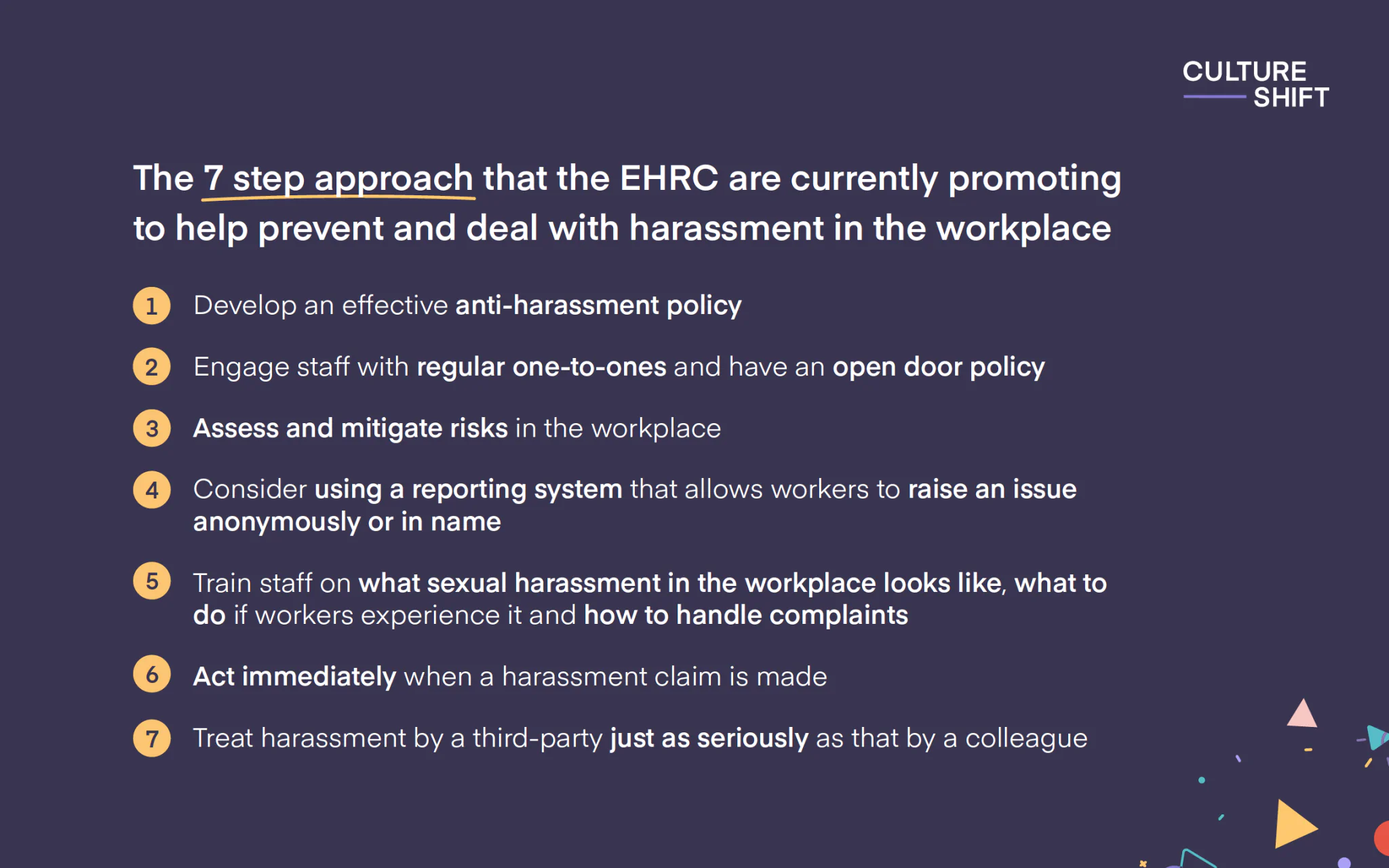
Thankfully, they have a 7-step approach with advice for employers on how to help prevent and deal with harassment in the workplace, which you can read more about here. Step 4’s guidance to “consider using a reporting system that allows workers to raise an issue anonymously or in name” is where we can help.
Working with Culture Shift to prevent bullying and harassment and EHRC’s Section 23
With nearly 100 partners across different industries and a potential end user reach of more than 2 million – including the Cabinet Office and Macfarlanes law firm – we are a market leader in helping organisations prevent workplace bullying, discrimination and harassment, improve workplace culture and to allow employees to feel more confident speaking up without fear of reprisal.
What we're reading
Latest insights from the front lines of workplace culture.

5 Things Every FE Provider Should Do Under the New Ofsted Toolkit
Ofsted's new FE toolkit grades inclusion separately. Colchester Institute's Stefan Jordan shares five steps to evidence impact and prepare for inspection.



Feeling inspired?
Take the first step toward preventative misconduct management with a demo of our Report + Support™ platform. We can show you how to breakdown reporting barriers with anonymous 2-way messaging, and how to act before things escalate with name-matching and pattern-spotting across our analytics dashboard.