Effects, eliminating & managing discrimination in the workplace
.png)
What is workplace discrimination?
Discrimination is the unjust or prejudicial treatment of different people based on their identity or protected characteristic(s). Though many know it is wrong and are taught this from a young age, workplace discrimination still continues to be an issue. Under the Equality Act 2010, the protected characteristics which make it against the law to be discriminated against are:
- Age
- Disability, including being neurodivergent, mental health or physical health issues such as cancer and HIV
- Gender reassignment (this now includes genderfluid and non-binary people)
- Marriage or civil partnership
- Pregnancy and maternity
- Race, including colour, nationality, ethnic or national origin
- Religion or belief, including having none
- Sex
- Sexual orientation
In some cases, discrimination can also be identity-based or because of other aspects of people’s lives even if it is not covered by law but does not detract from the incident or impact. These include but are not limited to: being single, divorced, your weight, political affiliation, tattoos and piercings, or the clothes you wear.
The prevalence of workplace discrimination
From our research, we found that 2 in 5 people have experienced bullying, discrimination and harassment at work and a further 44% have witnessed it. But what about employee discrimination against specific areas?
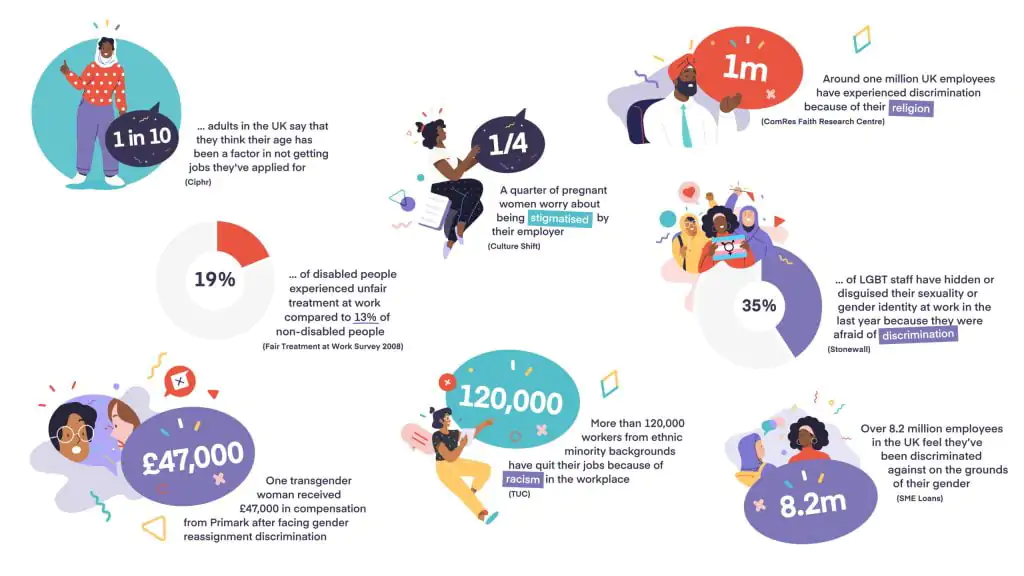
Below are some statistics regarding discrimination based on eight of the nine above protected characteristics to give you an idea of how prevalent they are. Statistics are hard to find for marital and civil partnership discrimination in the workplace and few cases are known, but you can read more about it here.
Types of discrimination covered by the Equality Act includes:
- Direct discrimination
- Indirect discrimination
- Harassment
- Victimisation
These can be outlined in detail here. Employers are also liable if discrimination arises because of something that happens because of a disability, for example, and if they fail to make reasonable adjustments that are requested. Reasonable adjustments could include requests for accessibility, technology (for disabled employees) or time off (for expecting mothers).
Reporting workplace discrimination with Culture Shift
At Culture Shift we hang our hat on the power of anonymous reporting. There are so many reasons why people do not want to report anything that has happened to them at work, ranging from:
- Not really knowing what happened to them constitutes workplace discrimination for example
- Not trusting the person or people they would normally have to make the report to – or they are the perpetrator
- Thinking they won’t be believed
- Thinking it’s not serious enough to report
- Fear of repercussions, including dismissal or further incidents
Co-founded by our CEO Gemma, who has faced maternity discrimination at work TWICE, Culture Shift is committed to helping educational institutions and workplaces be safe, happy and supportive of everyone, everywhere. And we believe our anonymous reporting platform can help to overcome the above barriers, reduce workplace bullying, discrimination and harassment of all kinds, and improve workplace culture as well as employee mental health and wellbeing. This in turn can help organisations reduce staff turnover, absenteeism and presenteeism, and prevent a poor reputation or a downturn in profitability.
But don’t just take our word for it. Anecdotal evidence from many of our more than 90 partners shows that our system is used and above all, trusted, by staff and students when implemented properly and cases are managed efficiently by those who are responsible for dealing with reports, whether they are anonymous or named. In addition, since we started in 2018, more than 12,000 reports have been made by end users from across all our partners. Read more about how Report + Support works.

How to deal with and prevent workplace discrimination
So you’ve identified that discrimination or other forms of problematic behaviour is happening in your organisation through our anonymous reporting system (hopefully), whether it’s a one-off incident or there is a trend happening. As an employer you will know of the legal responsibilities you have to ensure you are taking reasonable steps to prevent workplace discrimination and other forms of misconduct such as harassment from happening or from driving your employees to turn to social media to air their grievances, file a lawsuit against you or even whistleblow. But how do you do that?
It should be noted that those who wish to remain anonymous when reporting have the power in their hands, whether it’s the amount of information they disclose or whether they want specific action to be taken. Some may simply wish to tell someone or let their organisation know about it but not want to raise a formal complaint. If that is the case, other ways to deal with it and prevent it from continuing include:
- Implementing awareness campaigns
- Conducting targeted training on specific topics or in certain departments
- Reviewing and revising policies and procedures
- Reminding everyone on the resources, support and training available as well as the policies regarding bullying, discrimination and harassment
- Thoroughly investigating all claims of discrimination and following through on what is outlined in your policy
- Signposting to the reporting routes available
- Comparing it against similar reports or other analytics to see if there is a trend in the behaviour over time or in particular areas of the business
- Take stock of your current workplace culture by providing safe spaces and ways for people to give their opinion (such as forums or feedback surveys)
- Look to see if your organisational structure and the lack of diversity in it could be part of the blame
- Working with employees who request reasonable adjustments to help fulfil them
So whether you are looking for alternative ways for your employees to safely and confidently report any incidents to get a truer picture of what’s happening in your organisation, need assistance with dealing and preventing cases of discrimination and other forms of misconduct, or want to find solutions that are compliant with Equality and Human Rights Commission (EHRC)’s Section 23 agreement or the UK’s Whistleblowing Act, we at Culture Shift can help.
What we're reading
Latest insights from the front lines of workplace culture.

5 Things Every FE Provider Should Do Under the New Ofsted Toolkit
Ofsted's new FE toolkit grades inclusion separately. Colchester Institute's Stefan Jordan shares five steps to evidence impact and prepare for inspection.



Feeling inspired?
Take the first step toward preventative misconduct management with a demo of our Report + Support™ platform. We can show you how to breakdown reporting barriers with anonymous 2-way messaging, and how to act before things escalate with name-matching and pattern-spotting across our analytics dashboard.