Sexual Harassment Training Guide
Every UK employer must now take all reasonable steps to prevent sexual harassment, and if a claim reaches tribunal, your training will be one of the first things examined. This guide sets out what has changed under the Employment Rights Act, what your training needs to cover, and how it should be delivered to stand up to scrutiny.
Download it to get:

What’s changed in the law, and when?

What your training needs to cover

How your training needs to work
The extent of the problem
Managers are often the first person an employee turns to when something goes wrong, and how they respond shapes whether that person feels supported or stays silent. Employers must take all reasonable steps to prevent sexual harassment, and tribunals will look closely at what training was delivered, to whom and how often. Regular training tailored to managers’ responsibilities gives them the confidence to spot harmful behaviour, respond to disclosures and act early, and gives your organisation a clear record of the steps it has taken.
38%
evidencing regular training for managers
Only 38% of organisations said they could confidently evidence regular role-specific training for managers.
87%
exposed to workplace misconduct risk
87% of organisations are exposed to risk arising from workplace misconduct, with 1 in 5 rating themselves as ‘highly’ exposed.


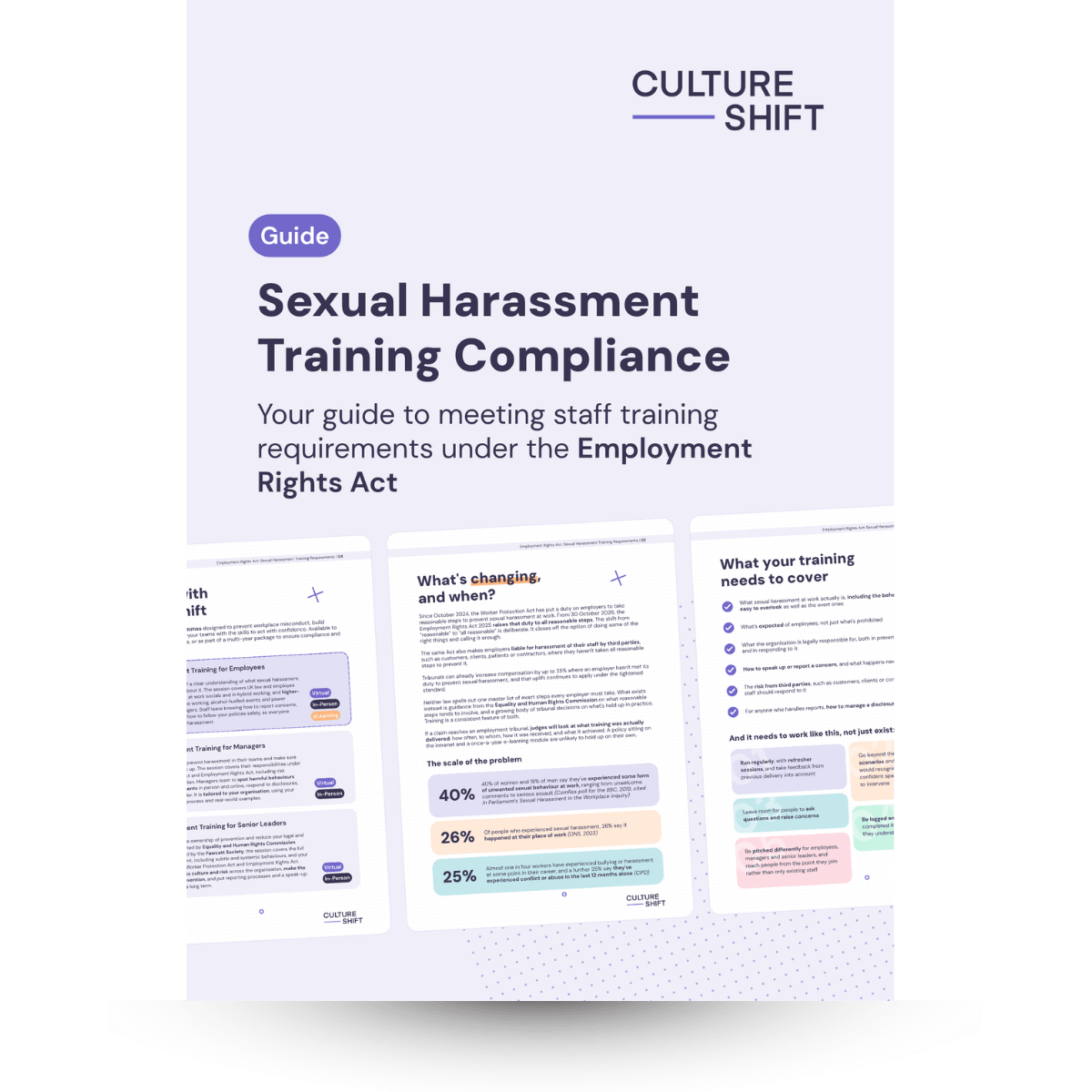
More about our Sexual Harassment Training Compliance Guide
The Employment Rights Act has raised the bar for every employer. The duty to prevent sexual harassment now requires all reasonable steps, and employers can be held liable when their staff are harassed by customers, clients, patients or contractors. This guide explains what has changed, what the EHRC expects, and why tribunals are paying closer attention to the training organisations can evidence.
It also sets out the scale of the problem. With 40% of women and 18% of men reporting unwanted sexual behaviour at work, harassment remains widespread, and much of it goes unreported. The guide shows why a policy on the intranet and an annual e-learning module are unlikely to be enough on their own.
At the heart of the guide is a practical breakdown of what effective training needs to cover:
- What sexual harassment at work looks like, including behaviours that are easy to overlook
- What is expected of employees and what the organisation is legally responsible for
- How to speak up or report a concern, and what happens next
- The risks posed by third parties and how staff should respond
- How those who manage reports should handle cases properly
The guide then explains how training should be delivered to stand up to scrutiny. That includes running it regularly with refresher sessions, using real scenarios, tailoring it for employees, managers and senior leaders, and keeping clear records of who has completed it and how well they understood it. Use it as a checklist to review your current approach and identify the gaps to close first.
Download your copy
FAQs
Questions? We've got answers.
The law does not set out a fixed list. What is reasonable depends on factors such as the size of your organisation, its resources and the risks your staff face. EHRC guidance points to steps including a clear policy, risk assessment, regular training, accessible reporting routes and prompt action when concerns are raised.
Training should run regularly, with refresher sessions, and start from the point someone joins your organisation. A single annual e-learning module is unlikely to be enough on its own if a claim reaches tribunal.
The EHRC’s guidance treats training as a central part of meeting the duty, and tribunals will look at what training was actually delivered, to whom, how often and what it achieved. In practice, an employer with no meaningful training will struggle to show it took all reasonable steps.
Still have questions?
The ever-changing regulatory landscape can be tricky to navigate - we're here to guide you through what your organisation needs to do to stay compliant and protect your people.

Your partner in preventing workplace misconduct
Misconduct rarely starts as a headline issue - it starts with something small that goes unaddressed. Culture Shift helps organisations surface concerns early, respond consistently, and embed long-term cultural change through our Report + Support™ platform, trauma-informed training programmes, and community-led best practice.