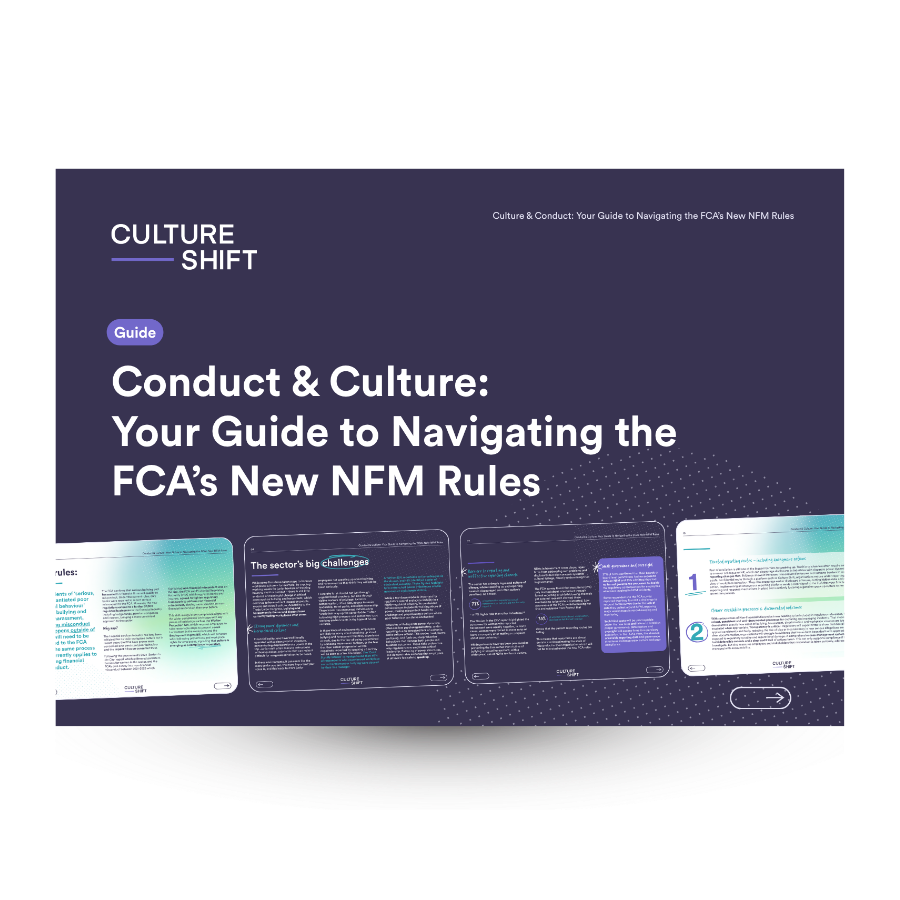
Complete Guide to FCA Non-Financial Misconduct
From 1 September 2026, the FCA’s Code of Conduct will formally extend to include Non-Financial Misconduct (NFM). This represents a fundamental shift in how workplace behaviour is regulated across financial services, bringing issues like bullying, harassment, discrimination and sexual misconduct firmly into the regulatory perimeter. This comprehensive guide explains what the changes mean in practice, what the FCA expects from firms, and how to build the systems, culture and evidence needed to stay compliant. Download the guide to:

Understand how the FCA defines and assesses Non-Financial Misconduct

Identify the cultural and governance risks driving regulatory scrutiny

Learn what "good" looks like under the new expectations for firms

Build a practical roadmap for Boards, HR and Compliance
Non-Financial Misconduct in numbers
Workplace misconduct remains significantly underreported across financial services, despite increasing regulatory focus and rising cultural risk. The FCA’s extension of its Code of Conduct reflects growing evidence that poor behaviour is not just an internal HR issue - it is a systemic regulatory concern.
77%
incidents go unreported
77% of employees who experience bullying or sexual harassment do not formally raise concerns.
70%
increase in reports
FCA data shows a 70% rise in reports of non-financial misconduct, including bullying, harassment and racism.
70%
impact on whistleblowers
70% of whistleblowers report victimisation, exclusion, or pressure to resign after speaking up.


More about our Complete Guide to FCA Non-Financial Misconduct
The FCA’s expansion of the Code of Conduct to include Non-Financial Misconduct marks a clear regulatory signal that culture is now a core component of compliance across financial services. From September 2026, firms will be expected to treat serious workplace behaviours such as bullying, harassment, discrimination and sexual misconduct as regulatory misconduct, not just internal HR issues. This shift reflects a broader move towards embedding culture, conduct and accountability directly into regulatory supervision, alongside wider UK developments such as the Worker Protection Act and Employment Rights Act.
This change has significant implications for how firms identify, manage and evidence misconduct risk. The FCA will expect organisations to go beyond policies and training, and instead demonstrate how culture is actively monitored, how issues are escalated and addressed, and how leadership is accountable for behavioural standards across the business. Underreporting, weak speak-up cultures and inconsistent handling of misconduct will all be areas of increased scrutiny, particularly where they indicate deeper governance or cultural weaknesses.
Our Complete Guide to FCA Non-Financial Misconduct provides a detailed breakdown of these expectations and what they mean in practice for regulated firms. It explains how the FCA defines and assesses Non-Financial Misconduct, why it is becoming a central regulatory concern, and how firms can embed the systems and evidence needed.
Rather than treating this as a compliance exercise, the guide sets out how firms can take a more proactive approach to identifying and addressing cultural risk early. It highlights the importance of moving from reactive case handling to preventative oversight, supported by better data, stronger reporting mechanisms and clearer accountability at board level. Ultimately, it is designed to help organisations understand what “good” looks like under the new regime and how to evidence it in a way that stands up to regulatory scrutiny.
Download your copy
FAQs
Questions? We've got answers.
It is a detailed resource explaining the FCA’s upcoming Non-Financial Misconduct rules, what they mean for regulated firms, and how organisations can prepare. It covers regulatory expectations, cultural risk areas, governance requirements, and practical steps for implementation.
In practice, NFM includes serious workplace behaviours such as bullying, harassment, discrimination, victimisation and sexual misconduct. Under the new rules, these behaviours are treated as regulatory concerns where they impact conduct standards, culture, or fitness and propriety.
The FCA has made clear that poor culture is a leading indicator of conduct and governance failure. By extending NFM into the Code of Conduct, the regulator is embedding culture directly into its supervisory approach and firm assessments.
Many firms underestimate the impact of underreporting, informal culture signals, power imbalances, and inconsistent case handling. These gaps can result in weak governance evidence, reduced speak-up confidence, and increased regulatory scrutiny.
Good practice involves more than policies, it requires active monitoring of culture, strong leadership accountability, effective speak-up systems, data-led insight into behaviour trends, and clear evidence that issues are acted upon consistently.
The guide helps firms understand where they may be exposed, what the FCA will look for during supervision, and how to build a structured approach to identifying, managing and evidencing Non-Financial Misconduct risk.
Yes. While HR and Compliance teams play a key role, the FCA expects ownership of NFM risk to sit across the organisation - particularly with Boards, senior leadership, risk functions and operational managers.
Firms risk regulatory action, reputational damage, weaker employee trust, and increased scrutiny from the FCA. Failure to demonstrate cultural readiness may also be viewed as a governance weakness during supervisory engagement.
Still have questions?
The ever-changing regulatory landscape can be tricky to navigate - we're here to guide you through what your organisation needs to do to stay compliant and protect your people.

Your partner in preventing workplace misconduct
Misconduct rarely starts as a headline issue - it starts with something small that goes unaddressed. Culture Shift helps organisations surface concerns early, respond consistently, and embed long-term cultural change through our Report + Support™ platform, trauma-informed training programmes, and community-led best practice.