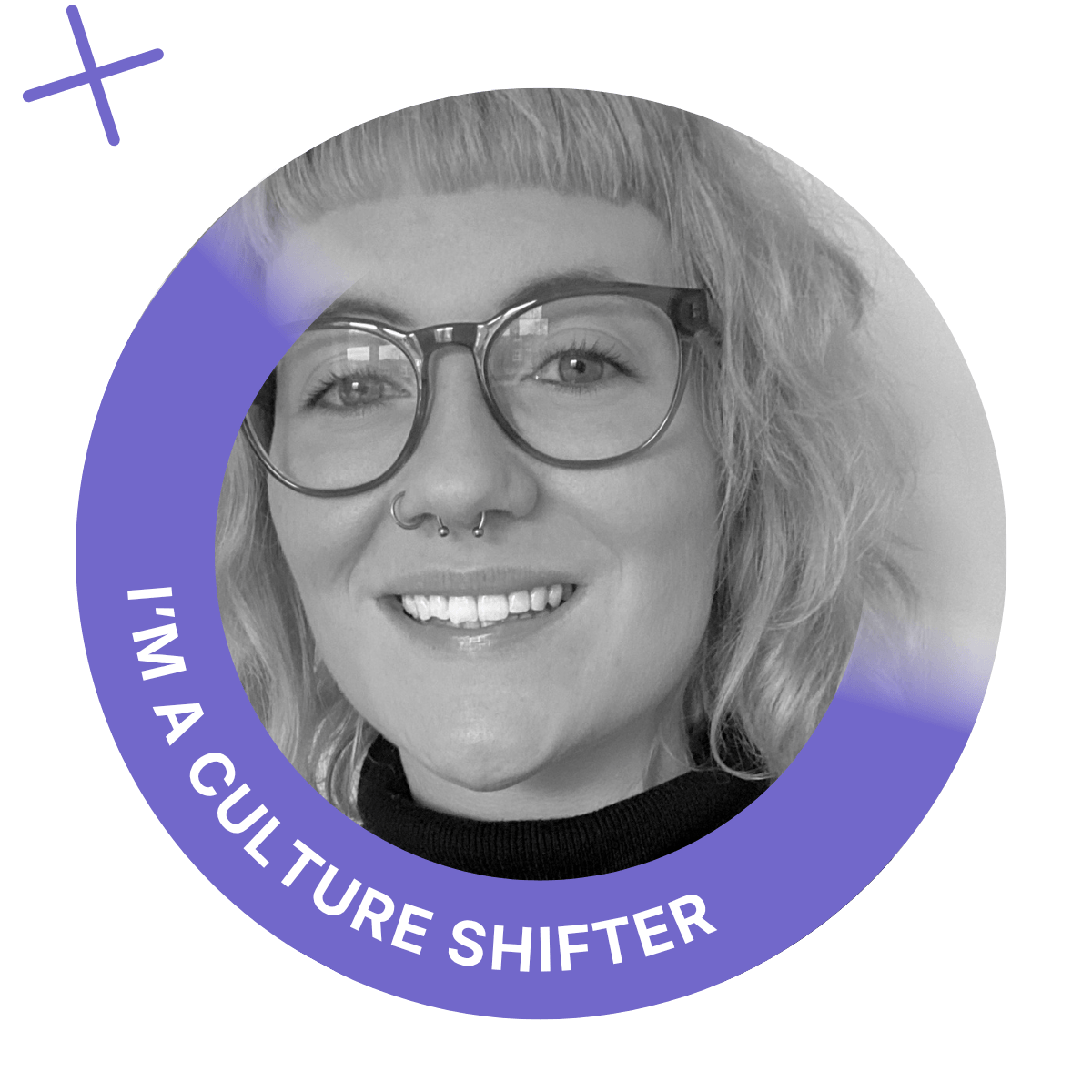
Dr Chloë Gough
Why do employees stay silent about workplace misconduct, even when the personal cost of staying silent is high? Dr Chloë Gough, Consultant Work Psychologist & Senior Inclusive Practice Lead at the Cabinet Office, has spent over a decade researching why bullying and harassment interventions succeed or fail. In our conversation, she explains why organisations mistake wanting change for being ready to receive it, why psychological safety across UK workplaces remains poor, and why the true cost of misconduct is rarely calculated.
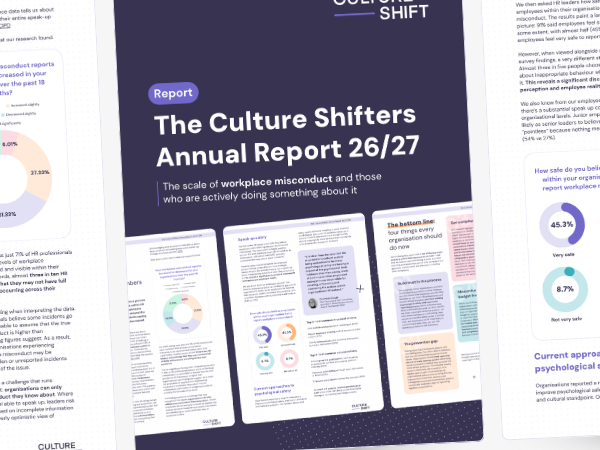
The Culture Shifters Annual Report 26/27
By mapping datasets from HR leaders and employees together, our inaugural Culture Shifters Annual Report reveals the gaps between what organisations believe about their culture and what employees actually experience, as well as where the biggest opportunities for meaningful change lie.

When we sat down with Dr Chloë Gough to hear about her career journey and unpack the findings of our latest Culture Shifters report, she set out why so many workplace interventions fail to stick, and what organisations get wrong about culture itself.
Change the environment, not the flower
Gough's PhD spent five years investigating why bullying interventions so often fail to deliver lasting results. Her conclusion: most organisations conflate the need for change with being contextually ready for it.
"I always liken it to planting a flower. How well a flower grows depends on the environment within which you place it. When it struggles to grow, what we should do is change the environment and not the flower."
The report's findings on organisational approaches echo this. Only 32% of organisations have a dedicated budget for misconduct and culture work, and just 39% share speak-up data with their board on a regular basis. Without addressing the conditions an intervention is placed into, Gough argues, even well-designed programmes are set up to wilt.
The silence paradox
Employees stay quiet, Gough explains, when they stop believing that speaking up will change anything.
"Perceived effectiveness amongst employees of reporting mechanisms is low... that creates a sense of psychological detachment from the organisation around the issue and then really limits people's confidence in speaking up and seeking support."
The report's own data reflects the paradox Gough describes. 57% of employees who experience bullying or harassment choose not to report it, while 91% of HR professionals believe employees feel safe to speak up. Only 1 in 5 organisations actively measure psychological safety, the very thing that determines whether that gap closes or widens.
Chloë's one tip for employers...
"Be honest, open, and accountable. The sooner that organisations own that they have an issue, or that prevalence rates aren't where they'd like them to be, and they commit to working on it legitimately as opposed to brushing it under the carpet, the better."
That principle runs through everything Gough researches and recommends. Organisations that own their culture problem publicly retain control of the narrative. Organisations that hide it hand that control to whoever exposes it instead.
Dive into some of the topics Chlöe discussed...
Did you know 91% of HR leaders are confident they could evidence all reasonable steps today, but only 38% have completed the risk assessments needed to prove it? Our inaugural Culture Shifters report explores the full compliance countdown facing UK employers, including the Employment Rights Act, third-party harassment protections, and the case study of Hunter v Lidl GB. Download your copy to discover:
The perception gap that's putting you at risk: why HR leaders feel confident and employees stay silent
The hidden cost of reactive culture: how much time and budget misconduct is quietly consuming
What "audit-ready" really means, and why most organisations can't prove compliance despite believing they can
.png)


Your partner for compliance and culture change
Regulators won't just ask what you have in place, they'll ask what you've done. Book a demo to see how Report + Support™ helps you evidence compliance, reduce legal exposure, and build a workplace where issues are prevented, not just managed.