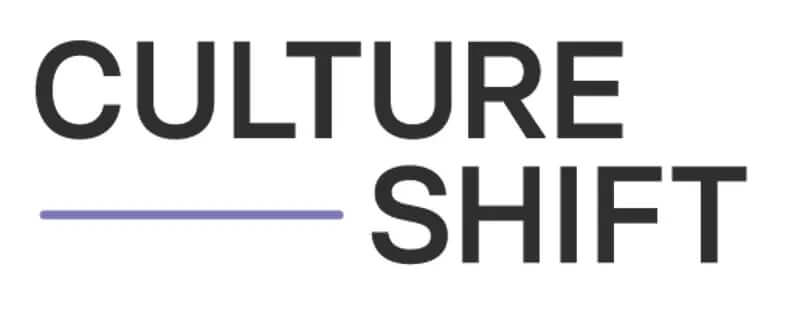
Ben Moss
What happens when an organisation has every policy in place but employees still don't feel safe to speak up? We sat down with Ben Moss to unpack this, and more - leveraging his 25 years specialising in workplace wellbeing and championing the power of creating more Good Days at Work. Ben is now Senior Research Leader in Workplace Health, Safety and Wellbeing at RAND Europe, and founder of the Business Wellbeing Expert where he helps clients develop compelling health & wellbeing (H&WB) propositions.
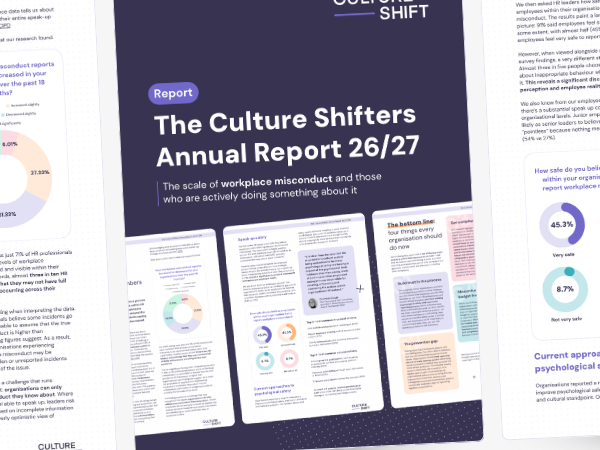
The Culture Shifters Annual Report 26/27
By mapping datasets from HR leaders and employees together, our inaugural Culture Shifters Annual Report reveals the gaps between what organisations believe about their culture and what employees actually experience, as well as where the biggest opportunities for meaningful change lie.

When we shared some of our report's findings with business wellbeing expert Ben Moss, he had a clear explanation for the gap in psychological safety many organisations are demonstrating.
Having a good process is not the same as having a good culture
"It's really critical in this context to understand and accept that process is not culture."
Ben's view is that this distinction gets lost in how organisations talk about psychological safety.
"The employee is the person who defines whether psych safety exists or not. It isn't the leaders and managers who define that, because it's not them that's experienced it."
The Culture Shifters Annual Report 26-27 backs this up in the data. Only 1 in 5 organisations actively measure psychological safety, and under half provide managers with training on how to create it. Ben's point is that organisations are often confident in their own definition of safety, without the evidence to know whether employees experience it the same way.
Prevention means understanding root causes, not managing cases faster
Ben pushed back on the idea that efficient case handling is the same as prevention.
"You have to be focused as an organisation on understanding and changing harmful conditions, rather than solely on processing cases in an efficient way and ensuring individual outcomes."
This matches what the Culture Shifters Annual Report found about the gap between intention and practice. 57% of organisations describe their approach to misconduct as proactive and preventative, yet only 41% consistently aggregate and analyse their speak-up data to identify patterns. Without that analysis, Ben's point is that organisations are treating symptoms rather than causes.
Board buy-in has to be personal
"Very few boards will say that they don't care about employee wellbeing, but there's quite a wide range of answers to why they care. That can be from directly saying it's about cost savings, through to because it's the right thing to do."
Our report shows why this matters. 68% of organisations either have no dedicated budget for misconduct and culture work or must compete for funds from another pot, and only 39% share misconduct and speak-up data with their board on a regular basis.
"Find a way of making employee wellbeing resonate with the board. It could be framing this around cost or risk for a financial director, or retention and hiring costs for an HR director. Nesting KPIs into board meetings, having it in the strategic plan, linking it to the values, these are all really important things."
Ben's one tip for employers...
"Measure presenteeism effectively. It's consistently there in the research that presenteeism has a much bigger impact on productivity than absence."
An employee who doesn't feel safe enough to speak up, or who reported and saw no meaningful action taken, is unlikely to simply stop turning up. Fear of repercussions, low psychological safety, and a lack of trust in the process are exactly the conditions that keep someone at their desk while disengaged, distracted, or managing the situation quietly. That would mean the cost shows up in reduced performance rather than absence records, which is harder for organisations to see and rarely gets attributed back to its actual cause.
Dive into some of the topics Ben discussed...
Did you know 91% of HR leaders are confident they could evidence all reasonable steps today, but only 38% have completed the risk assessments needed to prove it? Our inaugural Culture Shifters report explores the full compliance countdown facing UK employers, including the Employment Rights Act, third-party harassment protections, and the case study of Hunter v Lidl GB. Download your copy to discover:
The perception gap that's putting you at risk: why HR leaders feel confident and employees stay silent
The hidden cost of reactive culture: how much time and budget misconduct is quietly consuming
What "audit-ready" really means, and why most organisations can't prove compliance despite believing they can
.png)

Your partner for compliance and culture change
Regulators won't just ask what you have in place, they'll ask what you've done. Book a demo to see how Report + Support™ helps you evidence compliance, reduce legal exposure, and build a workplace where issues are prevented, not just managed.